|
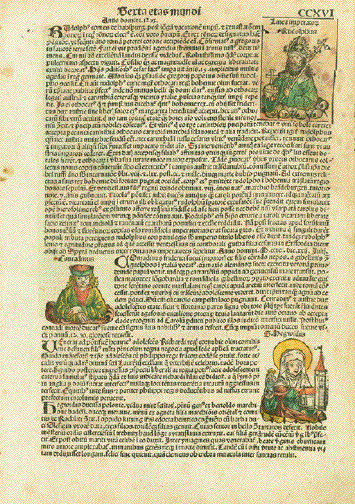
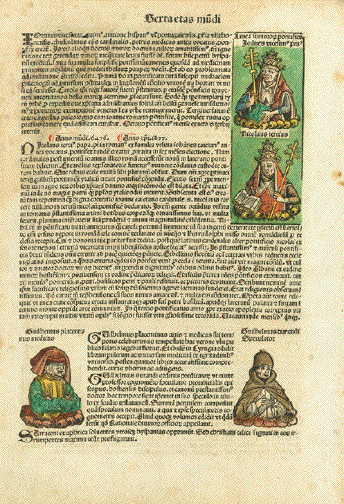
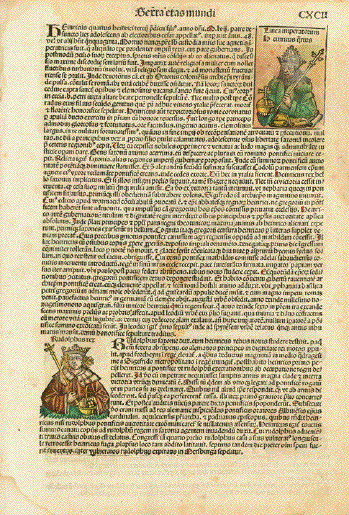
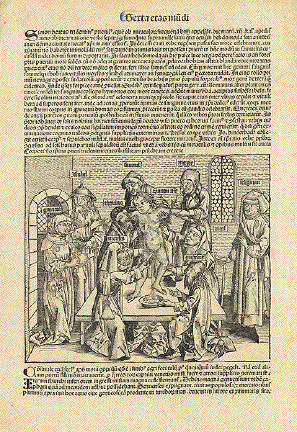
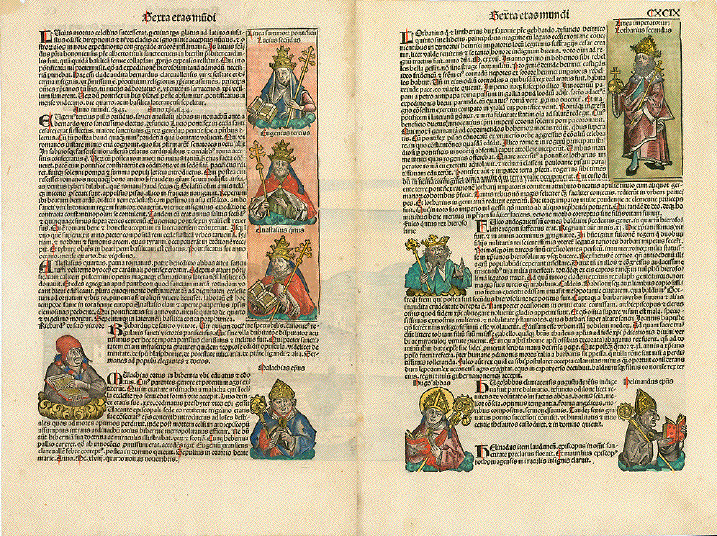
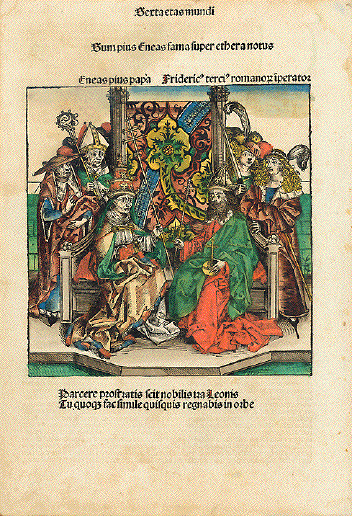
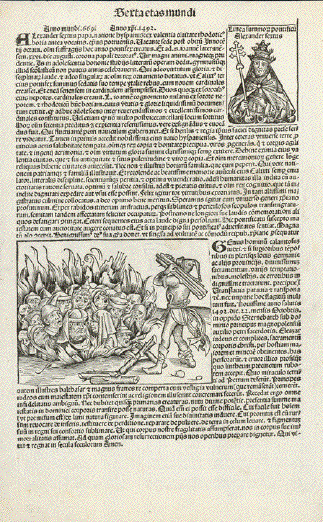
Schedel - Hl. Hedwig- Schlesien - Polen - Silesia - Jadwiga - Poland - Habsburg - österreich Staufer Schedel, Hartmann "Sexta etas mundi Seite CCXVI (216) Woodcut with original hand coloring. Altkolorierter Holzschnitt aus der Schedelschen Weltchronik From Nuremberg Chronicle. Latin (first) edition / Lateinische Erstausgabe Nürnberg, 1493 Zeigt folgende Portraits: Rudolf I von Habsburg - Graf von Habsburg (als Rudolf IV.) Konrad letzter legitimer Staufer, Herzog von Schwaben, König von Jerusalem und Sizilien Heilige Hedwig (Jadwiga) - Hedwig von Andechs - Herzogin von Schlesien - Äbtissin von Trebnitz Jadwiga was born in Andechs (Ammersee, Bavaria) became Duchess of Silesia and founded the convent in Trzebnica Rückseite: Papst Johannes XXI (1276-1277) Petrus Hispanus Papst Nikolaus III (Giovanni Gaetano Orsini) Wilhelm von Saliceto (Guglielmo da Saliceto) Arzt, Chirurg. Wegbereiter der chirurgischen Anatomie Wilhelm Durandus - Theologe - Philosoph - Bischof von Limoux (Okzitanien) Der attraktiv original-handkolorierte Holzschnitt aus dem Jahr 1493 entstammt der Schedelschen Weltchronik ( Nuremberg Chronicle) von Hartmann Schedel (1440 - 1514 Erhaltungszustand: Die Seite hat rechts oben, (bzw. von der Rückseite betrachtet links oben) einen alten Wasserschaden. Dadurch ist das Papier in der Ecke beschädigt. Es gibt mehrere kleine Perforationen, die das Portrait Rudolf I. betreffen. Die Margen sind rundherum altersbedingt fleckig. Die untere Marge hat einige Einrisse, die allerdings weitab von Text und Bild nicht beeinträchtigen. Condition: The page had some water damage in the upper right corner (looking from the reverse side: the upper left corner). Water damage has caused problem by the name Rudolphus Light general age toning. Margins all around show traces of age and use. Lower margins have some minor tears distant from text and images Page size: 41 x 28 cm (ca. 16.1 x 11") $ 190.00 Order Nr. SCHEDEL251783 |
|
Reverse side:
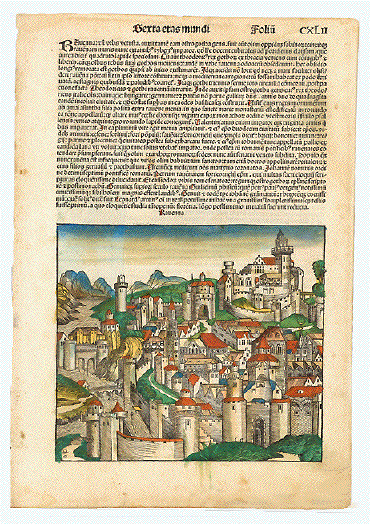
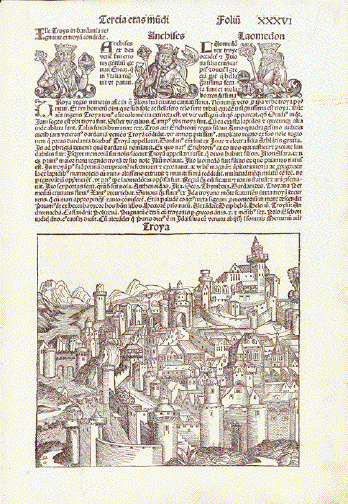
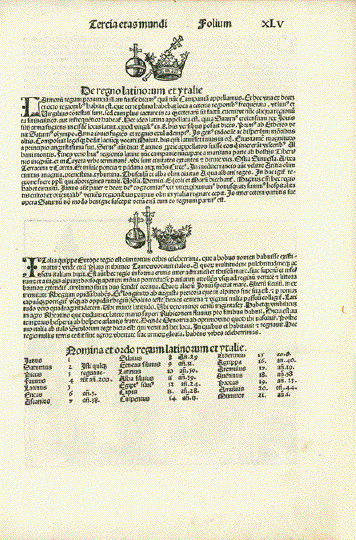
"Ravenna" Type of print: Woodcut Color: Original hand coloring. Superb. Royal! Publisher: Hartmann Schedel Published in: "Nuremberg Chronicle" . Page: CXLII = 142) Where: Nuremberg When: 1493 First edition. Latin language Reverse side has related text print.Plus four Popes: Symmachus, Hosmisdas, John and Felix Above view of Troy we see portraits of three Troyan kings Condition: Good for the age of 520 years. Browning from fingers turning pages in lower right margin corner Upper right has a water spot. There are minor traces of age and use. Some small tears in margins have been repaired Image of Troy: 20 x 22,2 cm (ca. 7.9 x 8.7") $ 420.00 Order Nr. SCHEDEL238624 |
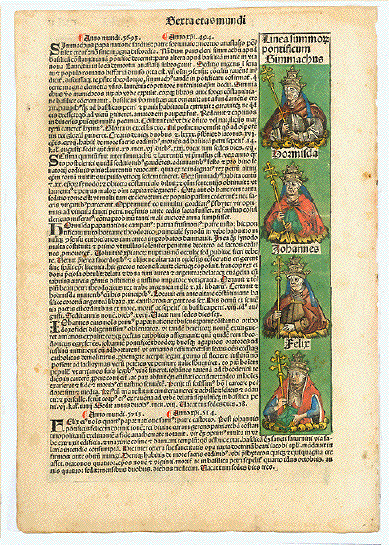
Order Nr. SCHEDEL254793 |
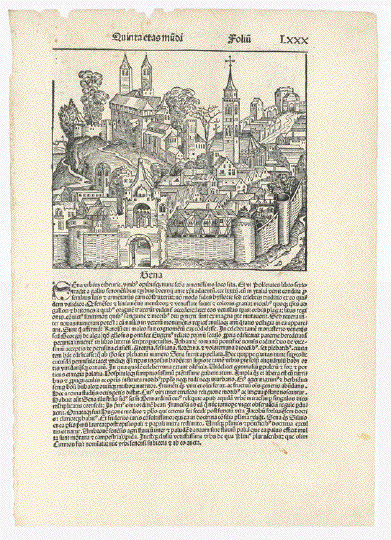
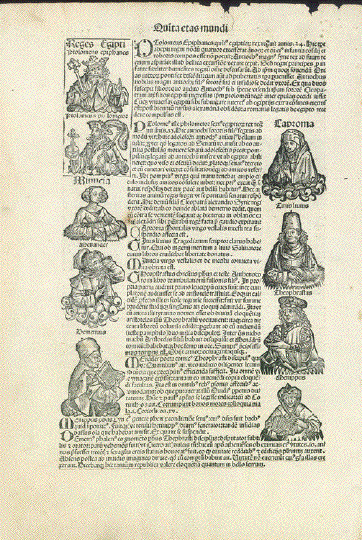
|
******* Reverse side:
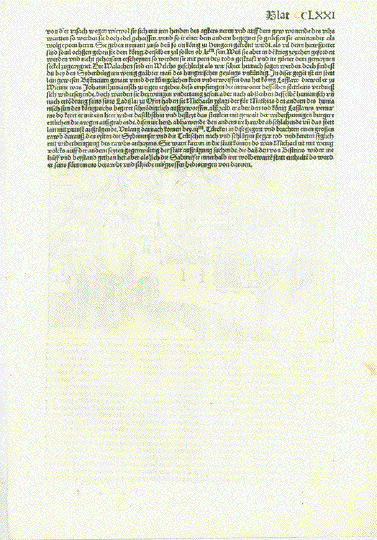
"Die Walachey" Incunabulum. Published in the ãNuremberg Chronicle", officially called ãLiber Chronicarum". By Hartmann Schedel. Nuremberg, 1493. German edition (the Latin edition was the regular edition. The German edition was printed in December 1493 Publication: World Chronicle. Also: Nuremberg Chronicle. Schedel's Weltchronik Author: Hartmann Schedel (1440-1514) Artists: Michael Wohlgemut (1434-1519) and Wilhelm Pleydenwurff (1440-1494) Publisher: Anton Koberger (1440-1513) Very good conditin for such an old print. Image: : 23.5 x 22.3 cm (9.8 x 8.7") Page size: 42.3 x 29.4 cm ( 16.6 x 11.2") $ 380.00 Order Nr. SCHEDEL254992 |
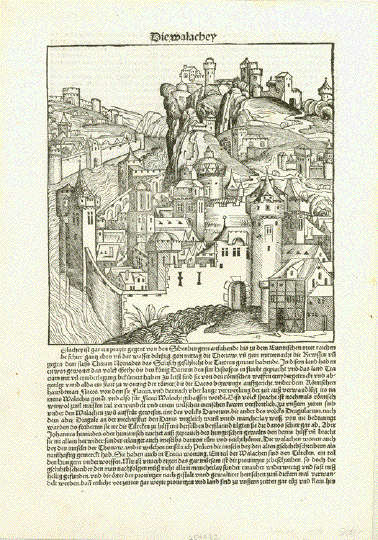
|
******** Reverse side:
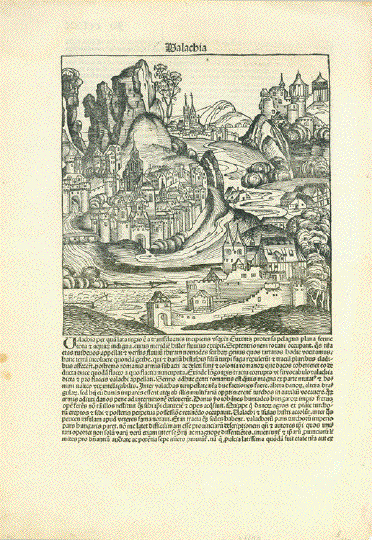
"Walachia". Woodcut. Incunabulum. Published in the ãNuremberg Chronicle", officially called ãLiber Chronicarum". By Hartmann Schedel (1440-1514). Nuremberg, 1493. Latin edition. Printed in May 1493. Publication: World Chronicle. Also: Nuremberg Chronicle. Schedel's Weltchronik Author: Hartmann Schedel (1440-1514) Artists: Michael Wohlgemut (1434-1519) and Wilhelm Pleydenwurff (1440-1494) Publisher: Anton Koberger (1440-1513) A few minor signs of age and
use in margins. Image: 23.2 x 22.4 cm ( 9.1x 8.8") Page size:: 45,5 x 32 cm (17.7 x 12.5") $380.00 Order Nr. SCHEDEL254993 |
|
******* Reverse:
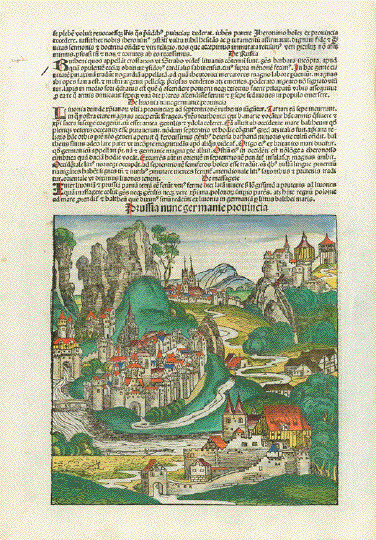
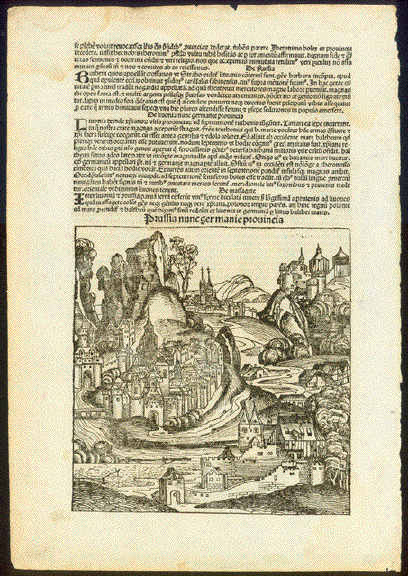
"Prussia nunc germanie provincia" Type of print: Woodcut Color: Excellent hand coloring Published in: Nuremberg Chronicle ("Weltchronik" (Liber Chronicarum) Author: Hartmann Schedel. Published: Nuremberg, 1493 (first edition) Text: Latin. Relating text print above image. Verso: Text print in Latin. This province, also called "East Prussia" by Germans was incorporated in Germany in the year 1466 during the Second Peace of Thorn. It remained the easternmost province of Germany until the end of World War II, when it became a part of Poland. Condition: Very good. Excellent
hand coloring. Image flawless. Margins a bit age toned with
some Image: 23 x 23 cm (ca. 9" square) Sheet size: 43 x 29,5 cm (ca. 17 x 11.5") $ 480.00 Order Nr. SCHEDEL254141 |
|
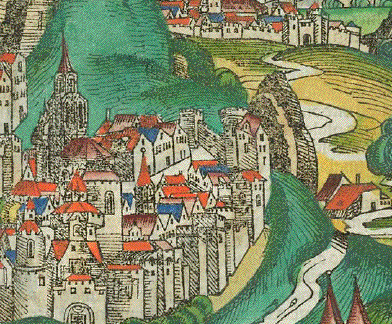
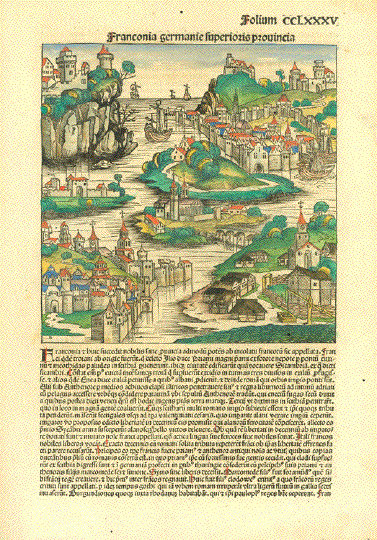
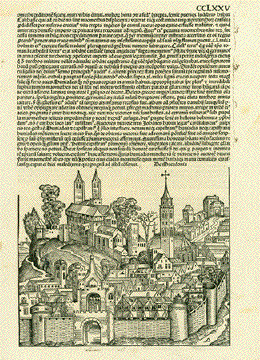
"Franconia germanie superioris provincia" Folium CCLXXXV (285) Franconia is the northernmost province in Bavaria. It is home of the SCHEDEL Chronicle, because this important incunabula book was printed in Nuremberg, the largest city in Franconia. From ancient times Nuremberg was an artist city (just think of Albrecht Duerer) and it was an intellectual, powerful and successful business center. Type of print: Woodcut Color: Excellent hand coloring Published in: Nuremberg Chronicle ("Weltchronik" (Liber Chronicarum) Author: Hartmann Schedel. Published: Nuremberg, 1493 (first edition) Text: Latin. Relating text print below image. Condition: Very good. Excellent hand coloring! Light general age toning gives the woodcut the desired patina. Margins with some small tears far away from image and some minor traces of age and use. Some spots in margins. There are six little round worm holes in image (4), text (1) and upper margin (1). They are so small, that they do not disturb the eye. Measurements: Image: 23,3 x 22,7 cm (ca. 9.2 x 8.9") Full sheet - 44 x 29 cm (ca. 17.3 x 11.4") $ 550.00 Order Nr. SCHEDEL254155 |
|
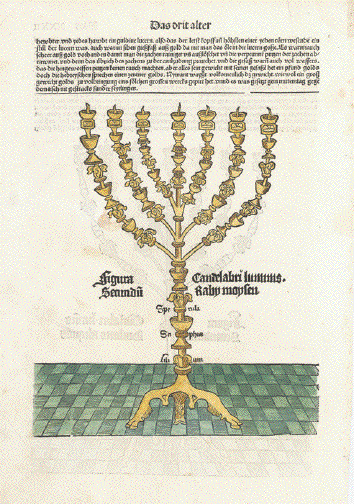
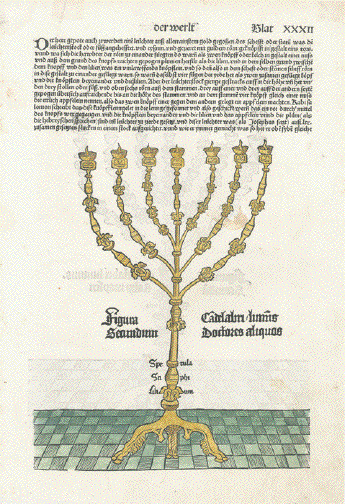
Minora of ãRaby Moysen" (Mose) Hand-colored woodcut from the Nuremberg Cronicle by Hartmann Schedel (1440-1515). Schedel, medical doctor, humanist and historian ist the author of the Cronicle. It was published by Anto Koberger (14440 / 45 - 1513), in Nuremberg in the year 1493 (Latin edition in the month of May, the very small and therefore rare German edition in December 1493). The minora is an important religious symbol in Judaism. Israel carries it in its state coat of arms. Front and back page of this important incunabila work show each a minora ãof pure gold". The print is over 520 years old and has some traces of age and use. One tear in upper margin repaired. The general condition, considering the age, is much better than good. Latin edition. . Page measurements: 42 x 28 cm ( 16.5 x 11" ) Order Nr. SCHEDEL244013SOLD Kolorierter Holzschnitt aus der Weltchronik von Hartmann Schedel (1440-1515). Schedel war Arzt, umfangreich gebildeter Humanist und Historiker. Die Nürnberger Chronik, auch Schedelsche Weltchronik genannt, ist sein wichtigstes Werk. Das umfangreiche, grossformatige Werk entstand 1493 in Nürnberg. Anton Koberger (1440 bis 1445 - Geburtsjahr nicht genau bekannt - 1513) verlegte dieses bedeutende Inkunabelwerk, zunächst in Latein (Mai 149, dann in deutscher Sprache (Dezember 1493). Der hier vorliegende handkolorierte Holzschnitt zeigt auf Vorder- und Rückseite je eine Minora ãaus purem Gold". Der Holzschnitt ist über 520 Jahre alt und hat einige kleine Alters- und Gebrauchsspuren. Ein kleiner Einriss in der oberen Marge wurde von alter Hand restauriert. Unter Anbetracht des Alters ist der Zustand des Holzschnitts viel besser als gut. Lateinische Ausgabe (Erstausgabe) Die ganze Seite misst 42 x 28 cm ( 16.5 x 11" ) Order Nr. SCHEDEL244013 SOLD Der siebenarmige Leuchter ist ein wichtiges religiöses Symbol des Judentums. Sie soll die Erleuchtung symbolisieren. Der Staat Israel hat die Minora in das Staatswappen aufgenommen. Moses erhielt auf dem Berg Sinai die Gesetzestafeln Gottes und den Auftrag, ein Heiligtum zu errichten. Es entstand die ãStiftshütte", zu der auch die Minora gehörte. |
|
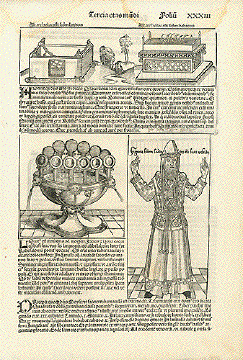
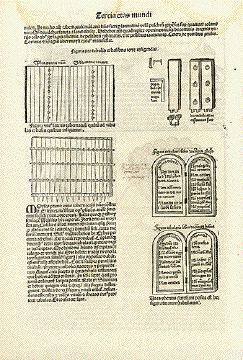
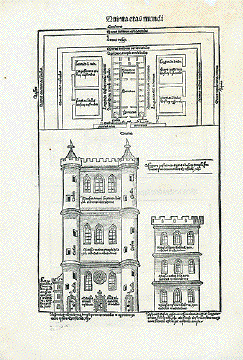
Individual parts of the tent of meeting (Jewish tabernacle) Front side of woodcut: Brazen altar Altar of incense High Priest cult clothing Laver Reverse side of woodcut: Building parts of Tabernacle Walls of Tabernacle made of acacia wood Tablets of the Law Woodcut from the Nuremberg Cronicle by Hartmann Schedel (1440-1515). Schedel, medical doctor, humanist and historian ist the author of the Cronicle. It was published by Anto Koberger (14440 / 45 - 1513), in Nuremberg in the year 1493 (Latin edition in the month of May, the very small and therefore rare German edition in December 1493). Some traces of age and use. But generally and considering over 500 years of age: Very good condition Size of sheet: 17.1 x 11.4" $ 280.00 Order Nr. SCHEDEL235515 - - - - - Bestandteile der Stiftshütte, die Moses nach Gottes Auftrag errichten musste. Vorderseite des Holzschnitts: Brandopferaltar, Räucheraltar Kleidung des Hoherpriesters Wasserbecken Rückseite des Holzuschnitts: Bauteile des Tabernakels Die Wände des Heiligtuzms aus Akazienholz Die Gesetzestafeln Holzschnitt aus der Weltchronik von Hartmann Schedel (1440-1515). Schedel war Arzt, umfangreich gebildeter Humanist und Historiker. Die Nürnberger Chronik, auch Schedelsche Weltchronik genannt, ist sein wichtigstes Werk. Das umfangreiche, grossformatige Werk entstand 1493 in Nürnberg. Anton Koberger (1440 bis 1445 - Geburtsjahr nicht genau bekannt - 1513) verlegte dieses extrem bedeutende Inkunabelwerk, zunächst in Latein (Mai 149, dann in deutscher Sprache (Dezember 1493). Lateinische Ausgabe. Einige
wenige Alters- und Gebrauchsspuren. Da über 500 Jahre
alt: Sehr guter Erhaltungszustand Maße des Holzschnitts: 43,5 x 29,0 cm $ 280.00 Order Nr. SCHEDEL235515 |
|
Macedonia Above the image is unrelated
text. On the reverse side is text (in Latin) about
Macedonia, Magnesia, Print has a few light stains
and spots in margins. Below the image is an unreadable word
in Image size: 19 x 22.5 cm ( 7.4
x 8.8 ") $ 380.00 Order Nr. SCHEDEL0554 |
|
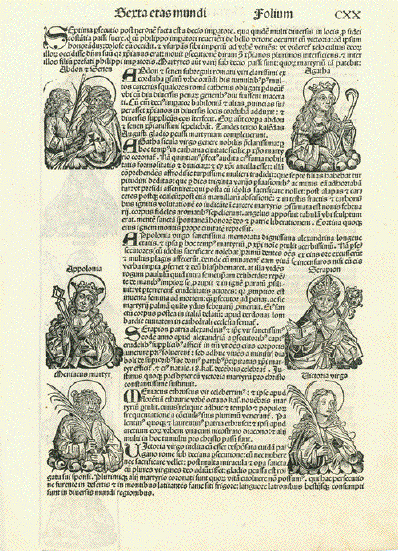
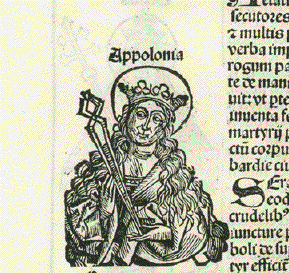
"Appolonia"
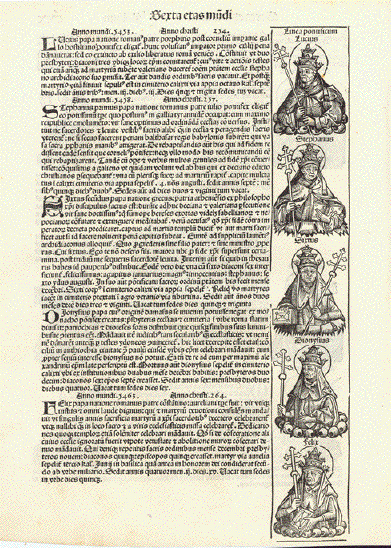
The story of this book is a story of superlatives. Hartmann Schedel, a medical doctor in Nuremberg who owned the most important private collection of books in all of Europe was the author. His library made the writing of this book possible. The writing and production of this book was teamwork. Among the more famous cooperators were Wilhelm Pleydenwurff and the painter and expert woodcutter Michael Wolgemut (1434-1519) who became the first noted book illustrator. His most famous apprentice up to 1489 was Albrecht Dürer who is supposedly contributed two woodcuts to the Chronicle. Poet Konrad Celtis contributed the German text which was published in December of the same year. Backside is printed with text and images. The other saints on the front side are Abdon & Senen, Agatha, Appolonia, Serapion, Meniacus and Victoria. On the reverse side are the Popes Lucius, Stephanus, Sixtus, Dionysius, and Felix. Page is in very good except for a slight uneveness in the paper on the lower edge.. Page size: 39 x 25 cm ( 15.3 x
9.8 ") $ 350.00 Order Nr.SCHEDEL238587 |
|
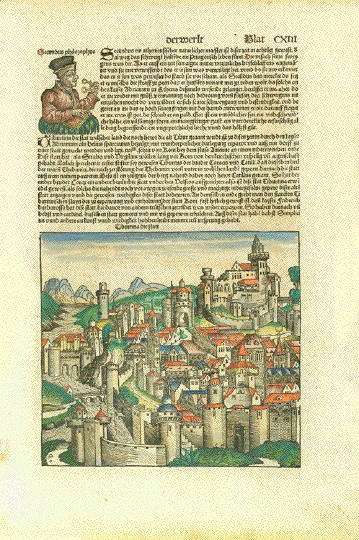
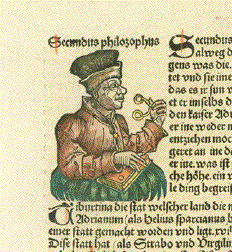
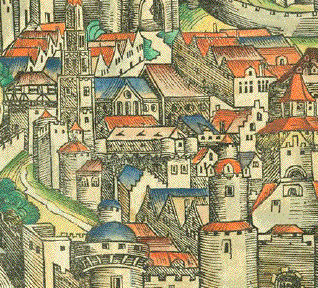
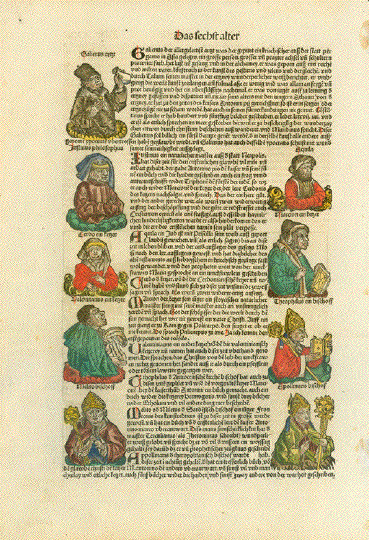
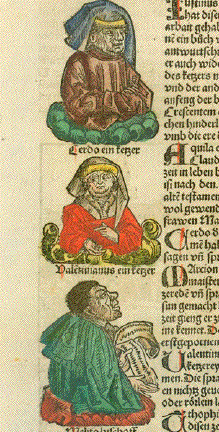
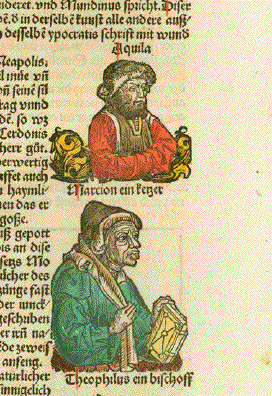
Rome. - "Tiburtina die statt" Das sechst alter der werlt. Lag. CXIII (113) Upper left: Portrait of "Secundus philozophus" Most likely holding in his hand the oldest depiction of looking glasses ever in print Type of print: Woodcut Color: Excellent hand coloring Published in: Nuremberg Chronicle ("Weltchronik" (Liber Chronicarum) Author: Hartmann Schedel. Published: Nuremberg, 1493 Text: German edition. Relating text print below image. Tiburtina is nowadays a city fraction of the City of Rome. The text describes it as being mentioned by Strabo and Virgil, supposedly older than Rome and founded by Greek immigrants to Italy. This print is from the very rare GERMAN EDITION of the Nuremberg Chronicle, which was fist published in LATIN in May 1493 and, with a very small German edition, in December 1493. Since the publishers were located in Nuremberg, Germany, they felt they should also publish this important incunabula work in the German language. But among scholars in all of Europe, the Latin language was the common language for communication, while German had a much smaller radius. That's why the Latin edition was the larger of the two. The philosopher, upper left, is depicted with a pair of looking glasses in his hand. It may be safe to speak of the first ever depicted pair of glasses in print history. Reverse side: 9 portraits of, a medical doctor (holding up and viewing a glass of urine), one philosopher - Justinus, three heretics and three bishops, among them Apollinaris. Condition:Very good. Excellent
hand coloring. Wide margins with stains and other traces of
age and use., like smal tears Image of Tiburtina: 20,2 x 22,4 cm (ca.8 x 8.8") Sheet size: 46 x 31 cm (ca. 18 x 12") $ 480.00 Order Nr. SCHEDEL254138 |
|
********** Reverse side:
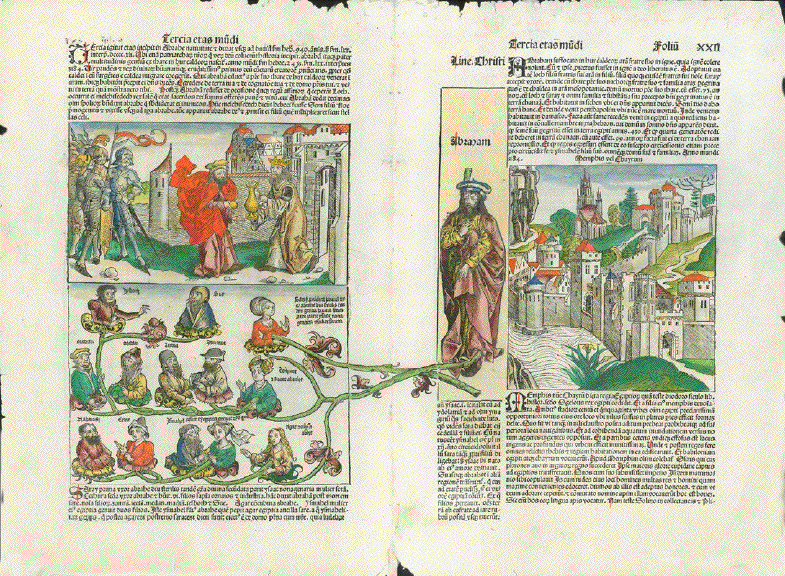
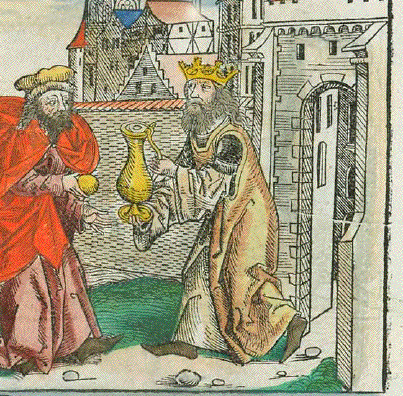
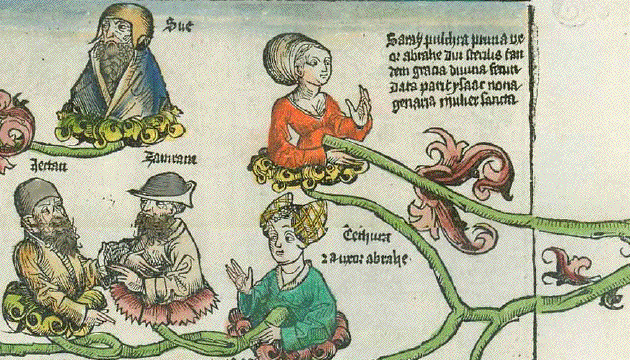
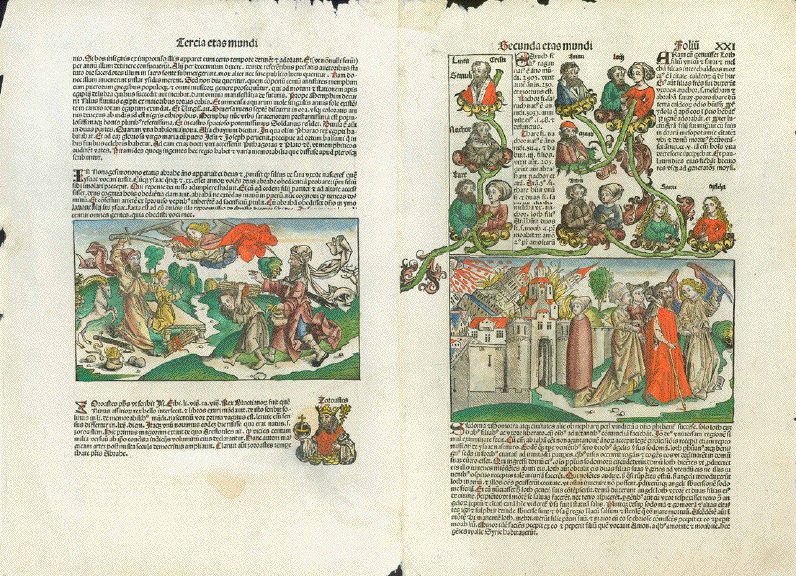
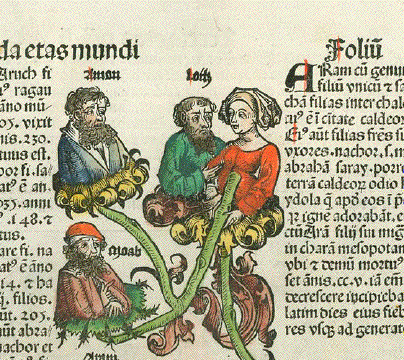
********** SCHEDEL double page - Abraham's family tree and lineage - View of Memphis, now Cairo (Kairo) - Egypt Nuremberg Chronicle. "Tercia etas mundi Fol. XXII" (page 22) Left side of left page:
Melchizedek meets Abraham. Melchizedek, King of Salem, High
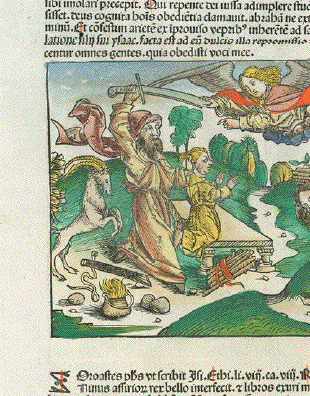
Priest of Abraham's family tree and lineage - Left side of right page: Abraham and further right: View of Memphis, now Cairo (Kairo) - Egypt Type of print: woodcut Color: Excellent hand coloring Published in: Nuremberg Chronicle ("Weltchronik" (Liber Chronicarum) Author: Hartmann Schedel. Printer: Anton Koberger Published: Nuremberg, 1493 Latin edition = first edition Reverse side Fol. XI (11) Left side: God orders Abraham to sacrifice
his son Isaak, and Abraham is ready to follow Portrait of Zoroastes - Prophet of the old Iranian Religion Right side: Nachor' and Melcha's lineage Continuation from reverse page XX (20) Below: Sodom and Gomorra Along the edges of this rarely
combined double page the margins are frayed here and
there. Sheet size (double page): 45 x 62 cm (ca. 17.7 x 24.4") $ 1450.00 Order N.r SCHEDEL254338 |
|
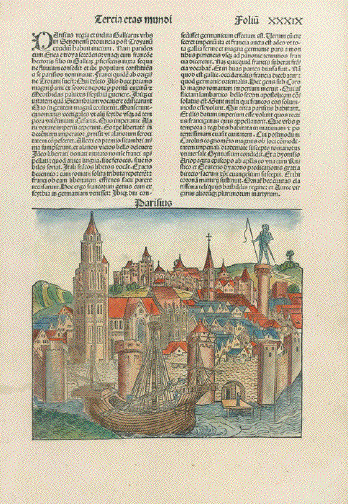
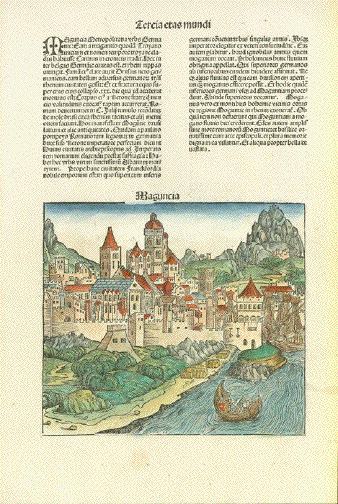
"Parisius" - Verso: "Maguncia" Views of Paris and Mainz Type of print: Woodcut Color: Very good hand coloring Published in: Nuremberg Chronicle ("Weltchronik" (Liber Chronicarum) Author: Hartmann Schedel. Published: Nuremberg, 1493 (first edition) Text: Latin. Relating text print above images. Condition: Very good. Very good
hand coloring! Light general age Measurements: Paris: 19,3 x 22,5 cm (ca. 7.6 x 8.8") Mainz: 19,8 x 22,2 cm (ca. 7.8 x 8.7") Sheet: 43 x 28,5 cm (ca. 16.9 x 11.2") $ 650.00 Order Nr. SCHEDEL254764 |
|
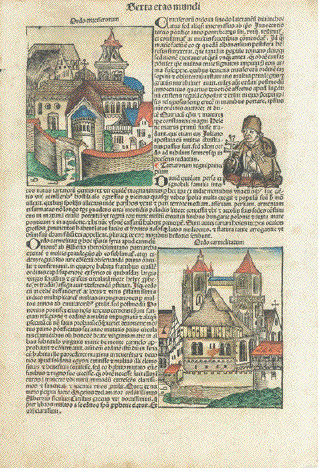
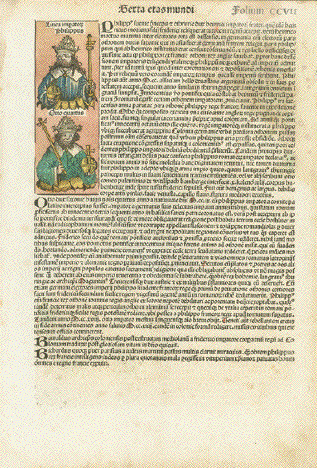
Schedel, Hartmann "Sexta etas mundi Seite CCVII (Seite 207) Woodcut with original hand coloring. Altkolorierter Holzschnitt aus der Schedelschen Weltchronik From Nuremberg Chronicle. Latin (first) edition / Lateinische Ausgabe Nürnberg, 1493 Abbildungen / Images: Philipp von Schwaben (1177-1208) aus dem Adelsgeschlecht der Staufer Römisch-deutscher König Otto IV. von Braunschweig (1175/6 - 1218) aus dem Haus der Welfen. Römisch-deutscher König. Kaiser des rmösch-deutschen Reiches - Ordo Crucifero(a)rum - Orden der Kreuzträger. Religiöser Orden im 12. Jahrhundert - Daneben ein Kreuzträger-Mönch - Karmeliterorden - Orden der Brüder der alleeseligsten Jungfrau Maria vom Berge Karmel Zustandsbeschreibung: Wunderschönes Altkolorit. Der Holzschnitt hatte einen Wasserschaden, der die obere recht, bzw linke Ecke betrifft. Margenränder zeigen eibige Spuren von Alter und Gebrauch. Kleine Einrisse in der unteren Marge abseits von Text und Darstellung Condition: Attractive original hand coloring. Print had water damage in upper left / right corner (depending on which side you are looking at). Margins show traces of age and use. Lower margin has repaired tears distant to text and images. 41 x 28 cm (ca. 16.1 x 11") $190.00 Order Nr. SCHEDEL251782 |
|
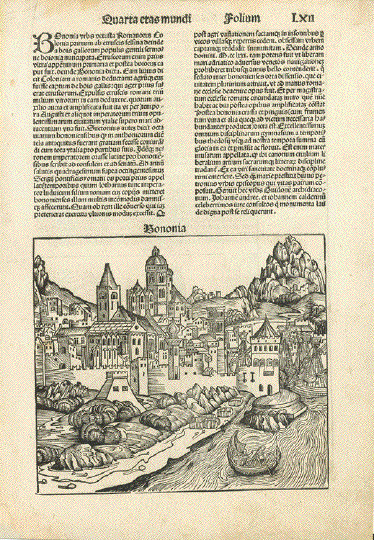
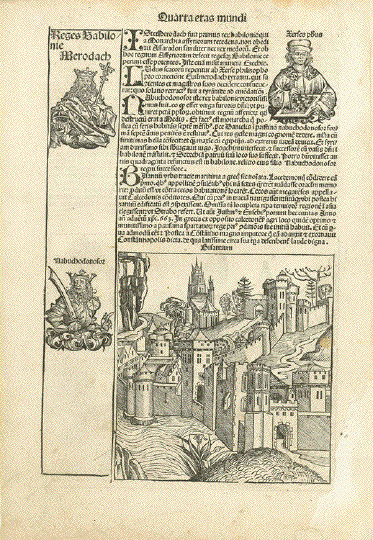
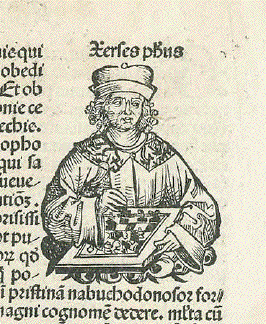
CHESS - SCHACH - ECHECS ISTANBUL - TURKEY - ITALI BOLOGNA "Quarta etas mundi - Xerses ph'us" Xerxes (the Great) playing chess. Woodcut Published in "Nuremberg Chronicle" (Schedelsche Weltchronik) Latin edition By Hartmann Schedel (1440-1514) Nuremberg, 1493 This may well be the oldest printed image of a a chess game! Also on this page: Portraits of the Babylonian kings Merodach and Nebukadnezar. A view of Byzantium / Byzanz - Today: Istanbul Reverse side: View of Bononia = Bologna in Italy General age toning. Lower right corner (respectively: Lower left corner, as seen from the reverse side of print) has an century old replacement repair of missing margin corner. Other minor traces of age and use. Measurements: Chess - Xerxes playing chess: 7,5 x 5,5 cm (ca. 3 x 2.2") Istambul (Byzantium / Byzanz): 17,9 x 16,7 cm (7 x 6.6") Bologna (Bolonia): 19,9 x 22,5 cm (ca. 7.8 x 8.9") $ 600.00 Order Nr. SCHEDEL254487 |
|
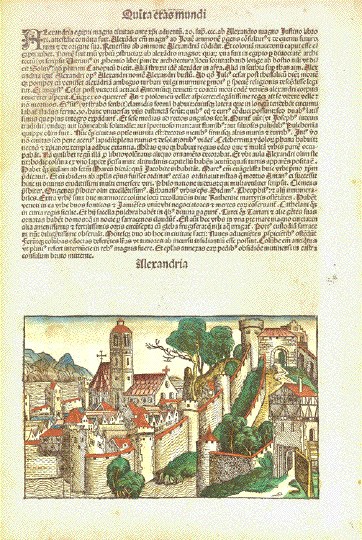
Published in: Nuremberg Chronicle ("Weltchronik" (Liber Chronicarum) Author: Hartmann Schedel. Published: Nuremberg, 1493 (first edition) Incredibly beautiful original hand coloring. Condition: This page is more than 500 years old!!!! There are traces of age and use. Some spotting also from fingers turning pages. But considering the age the general condition is nearly very good. Size of the view of Alexandria: 14 x 22,3 cm (ca. 5.5 x 8.8")
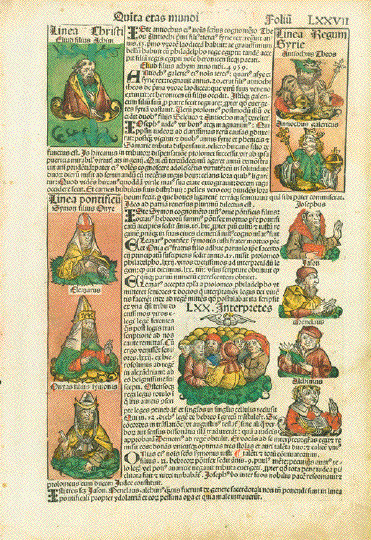
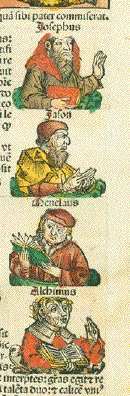
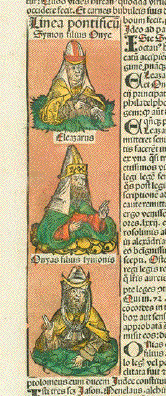
Geneology of Christ Eliud, son of Achim (ancester of Jesus Christ) Bishop Symon Bishop Eleazarus Bishop Onyas Sohn des Lymonis lineage of the Kings of Syra Antiochus Theos Antiochus Galericus Joseph Jason Menelaus Alchimus Congregation of interpreters (Prophets) ******** Reverse side:
Size of the view of Alexandria: 14 x 22,3 cm (ca. 5.5 x 8.8")
Published in: Nuremberg Chronicle ("Weltchronik" (Liber Chronicarum) Author: Hartmann Schedel. Published: Nuremberg, 1493 (first edition) Incredibly beautiful original hand coloring. Condition: This page is more than 500 years old!!!! There are traces of age and use. Some spotting also from fingers turning pages. But considering the age the general condition is nearly very good. Size of the view of Alexandria: 14 x 22,3 cm (ca. 5.5 x 8.8") Page size: 42 x 28 cm ( 16.5 x 11") $ 440.00 Order Nr. SCHEDEL254208 |
|
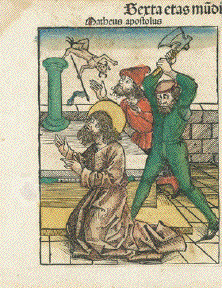
"Matheus apostolus" Martyrdom of Saint Matthiew - Matthaeus, Matthieu, Matteo Woodcut Type of print: Woodcut Color: Excellent original hand coloring Published in: Nuremberg Chronicle ("Weltchronik" (Liber Chronicarum) Author: Hartmann Schedel. Published: Nuremberg, 1493 (first edition) Text: Latin. Relating text print above image. Verso: Text print in Latin This print is top left corner of a full page. It was obviously cut out to feature only Saint Matthiew. The bottom margin is added. Reverse side has text print 14 x 10,6 cm (ca. 5.5 x 4.2") $ 120.00 Order Nr. SCHEDEL254791 |
|
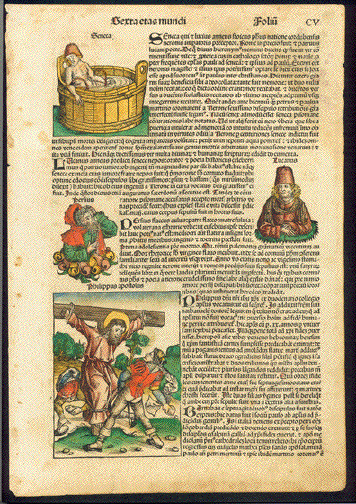
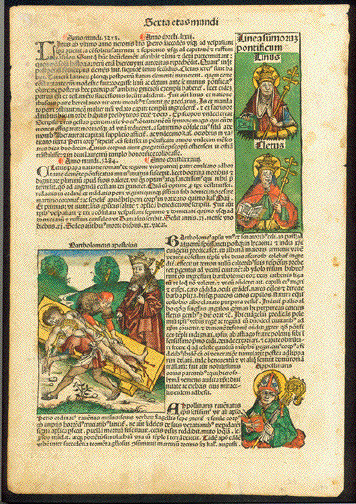
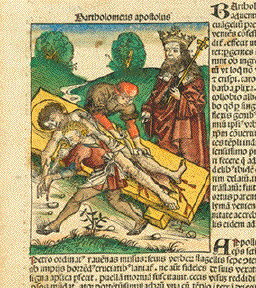
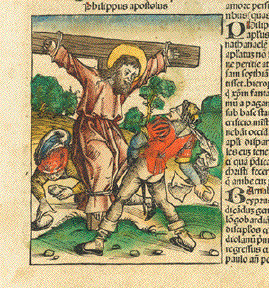
"Sexta etas muundi - Fol. CV" Page 105 Front page images: "Seneca" committing suicide in the bathtub "Persius" Aulus Persius Flaccus (AD 34 - 62) Roman poet of Estrucan extraction "Lucanus" Marcus Annaeus Lucanus (AD 39 - 65). Roman poet related to Seneca "Philippus apostles". Philipp, one of the 12 apostles. Crucified and stoned ***** Verso: "Linus" - Pope Linus (AD 33- 79) "Cletus" - Pope Anacletus (in office AD 79 - 92) "Bartholomaeus apostulus" Bartholomaeus, one of the 12 apostles. According to legend Bartholomay was killed by peeling his skin off his living body "Appollinaris" Bishop in Ravenna Woodcut from Nuremberg Chronicle. 1493 Outstanding original hand coloring. Superb quality! Upper right, respectively upper left corner has waterstain with small repaired broken paper. Absolutely no effect on any of the images on either side. Generally aged paper, age and use showing. See scans. Page size 42 x 28,5 cm (ca. 16.5 x 11.2") $ 1100.00 Order Nr. SCHEDEL249615 |
|
Turkey, . "De turchis" The Schedel Chronicle does not render city views as we see the cities of the world in our time. But here it seems as if Constantinople was model for this woodcut, showing the two repairman areas of Europe and Asia facing each other across the waters of the Bosporus. I admit, it takes some fantasy to follow my assumption. but the division of the two continents seems comprehensibly pictured. Type of print: Woodcut Color: Excellent hand coloring Published in: Nuremberg Chronicle ("Weltchronik" (Liber Chronicarum) Author: Hartmann Schedel. Published: Nuremberg, 1493 (first edition) Text: Latin. Relating text print above image. Reverse side: "Tracia" Tracia is not a national unity, never was. It was rather a multi ethical geographical area with antique roots. The depiction in the Schedel Chronicle has an aphyllous tree brachiate tree i the center, which symbolizes, to me, the delta of the mighty Danube river. Tracia comprises areas of Bulgaria, northern Greece and Macedonia as well as the European part of Turkey. Condition: Very good. Excellent hand coloring on either side of the print. Margins show some minor traces of age and use. Measurements: De Turchis: 23 x 22,5 cm (ca. 9 x 8.8") Tracia: 23 x 22,4 cm (ca. 9 x 8.8") Sheet: 44,5 x 31 cm (ca. 17.5 x 12.2") $ 580.00 Order Nr. SCHEDEL254140 |
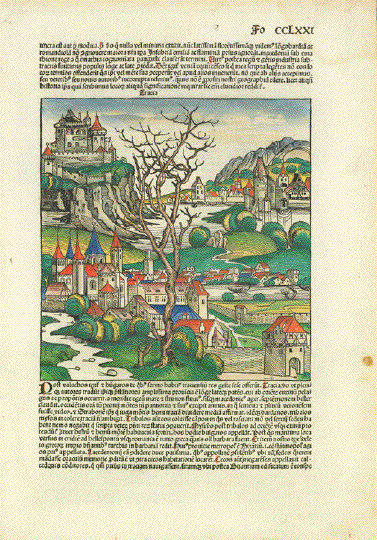
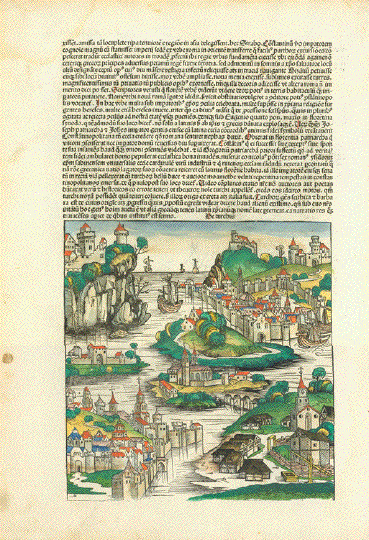
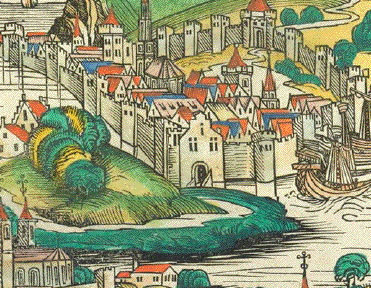
|
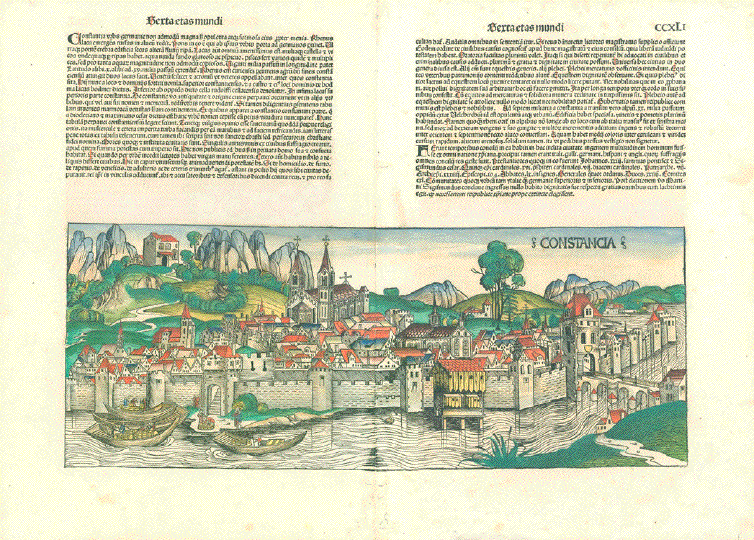
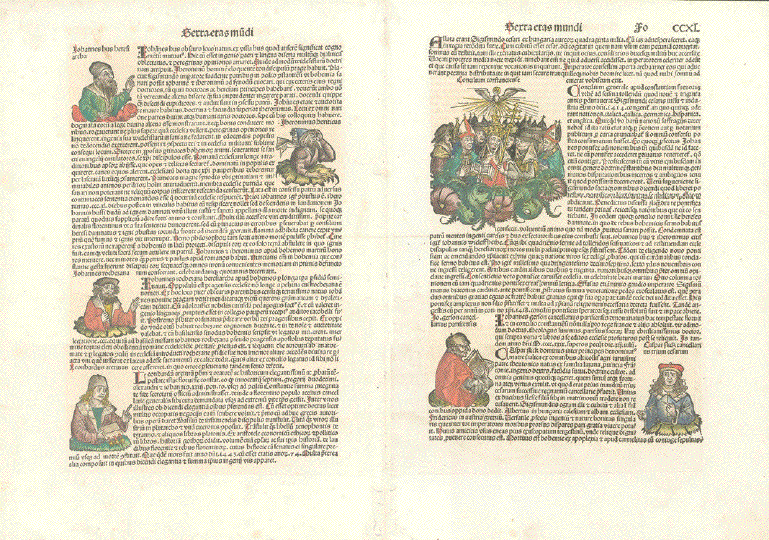
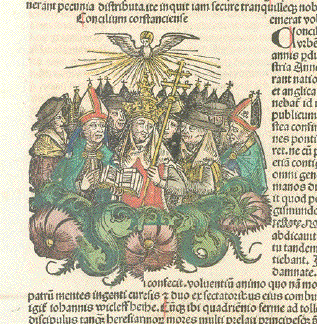
Konstanz. - "Constancia" Sexta etas mundi. Pag. CCXLI (241) General view of the important city in Lake Constance (Bodensee) Type of print: Woodcut Color: Excellent hand coloring Published in: Nuremberg Chronicle ("Weltchronik" (Liber Chronicarum) Author: Hartmann Schedel. Published: Nuremberg, 1493 (first edition) Text: Latin. Relating text print above image. Verso: Portraits of Johannes (John) heretic, Hieroniemus, heretic, Johannes (John) another heretic, Leonardus Bruni, an Italian humanist, Jean le Chartier, Theologian, Mystic and Chancellor of the Parisian Sorbonne University, Caspar Flick Very good condition. Excellent
hand coloring. Wide margins.Margins with minor traces of age
and use. Image: 20 x 52,5 cm (ca. 7.9 x 20") Page size: 45 x 64 cm (ca. 17.7 x 25") $ 2400.00 Order Nr. SCHEDEL 252187 |
|
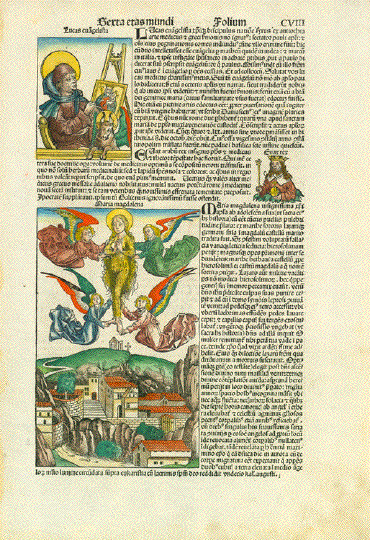
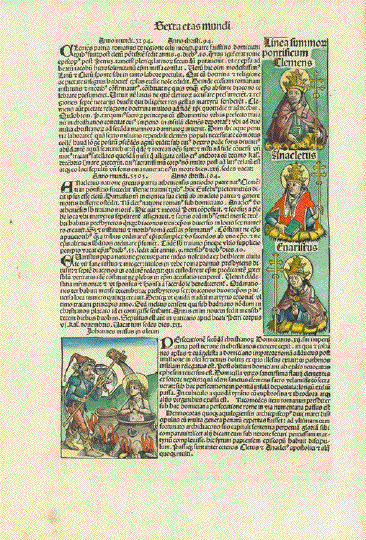
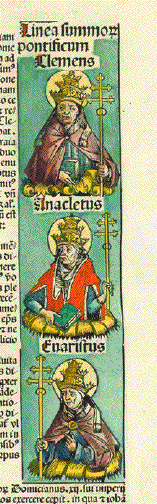
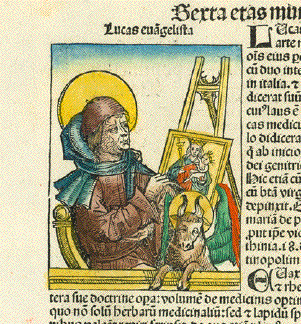
"Sexta etas mundi Folium CVIII (108)" Lucas, evangelist - Maria Magdalena Verso: John, evangelist tortured in boiling oil Portraits: Pope Clemens Romanus - Pope Anaklet (Anaclet) (the second to follow St. Peter, an important early leader of the Roman Church) - Pope Evaristus, the fifth Pope, leader of the Roam Church. Woodcuts on the complete text page. Latin edition Published in May, 1493 This is a wonderful example of the highest quality of original hand coloring, so exquisite in fact, that there is not the slightest criticism is appropriate. Maria Magdalena, the only woman, except for His mother Mary, who was close to Jesus, shown here as a saint with her foot long hair covering her nakedness and held by the four arch angels (Christian tradition): Michael, Gabriel, Raphael and Uriel, while she hovers above the Holy Cross of Golgatha and the city of Jerusalem. Maria Magdalena was present at the side of Jesus at his Crucifiction. St. Lucas, upper left corner, looking at a painting of Mother Mary and Jesus as a child on an easel. The Lucas symbol, the bull, here given a halo. Aside from the equally carefully hand-colored pope portraits verso, Saint John, the youngest of the evangelists, and the only one who died a natural death, is shown tortured in a cauldron of boiling oil. Full page has only minimal traces of age and use. The page comes obviously from a very special Chronicle. The diligence and carefulness of the application of well chosen colors suggest and indicate this. Image Maria Magdalena: 21,4 x 13,5 cm (ca. 8.4 x 5.3") Image Lucas, evangelist: 9,8 x 7,8 cm (ca. 3.9 x 3") Image John Evangelist tortured: 9.8 x 8 cm (ca. 3.9 x 3.1") Full sheet: 45 x 31 cm (ca. 17,7 x 12,2") $ 1700.00 Order Nr. SCHEDEL252893 |
|
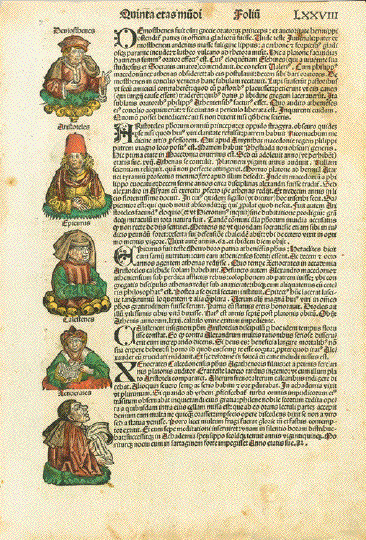
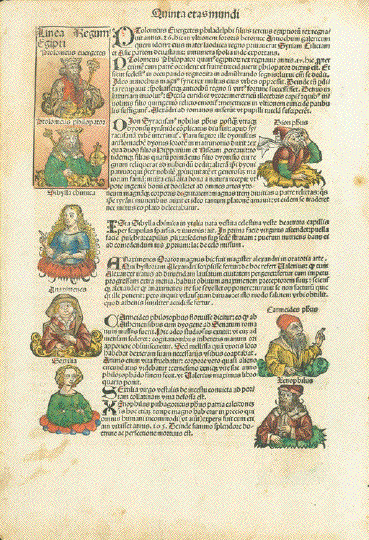
Published in "Nuremberg Chronicle" (Schedelsche Weltchronik) Nuremberg, 1493.
Names from top to bottom of
page: ***** Reverse side:
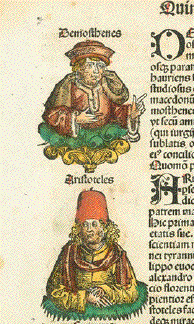
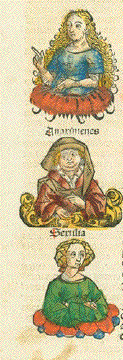
"Linea Regnum Egipti" (Egytian kings): Ptolomeus energetes Ptolomeus philopator Dion of Syracuse was a Greek politician in Sicily and a friend of Platon's Sibilla chemic Carneades - Greek skeptic Anaximedes - Greek natural pholosophical astronomer Sertelia - Vestalische Jungfrau Xenophilus - Greek philosopher and musician Incredibly beautiful original hand coloring. Condition: This page well over 500 years old!!! There are traces of age and use. Some spotting also from fingers turning pages. Small, repaired tear on lower margin edge. But considering the age the general condition is nearly very good. Page size: 42 x 28 cm (16.5 x 11") $ 350.00 Order Nr. SCHEDEL238097 |
|
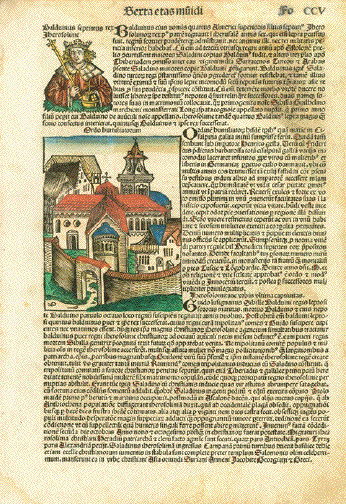
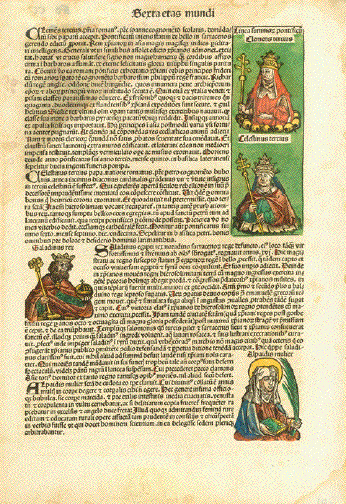
Humiliati - Umiliati (Italian) Sexta etas mundi. - "Ordo humiliatorum" Schedel folio CCV Woodcut. Published in "Nuremberg Chronicle" (Schedelsche Weltchronik) Nuremberg, 1493 Original hand color Description of a monastic order of men, founded in the 12th century in Lombardy (Italy). The order was abolished, struck by a papal bull in 1571. An associated order of women continued to exist well into the 20th century. The Nuremberg Chronicle dates back into the incunabula times of book printing. Orignal hand colored copies are very rare!. On the front page we have also the portrait of King Balduin, 7th King of Jerusalem. The Kingdom of Jerusalem was the Kingdom of Crusaders. It initiated in the year 1099 and existed until the year 1291. Balduin was King of Jerusalem from 1174 to 1183. Verso from above: Pope Clemens III. - Pope Celestinus III. - Saladin (Salah ad-Din) first Sultan of Egypt and Syria - Alpais, Holy woman. Condition: Very beautiful and rich original hand coloring. Upper corner has water stain. In the stain two tiny holes in Paper. No damage done to any of the images. Page size: 41 x 28 cm (ca. 16.1 x 11") $ 340.00 Order N. SCHEDEL 252333 |
|
Reverse side:
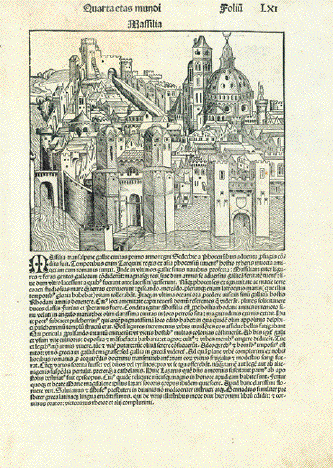
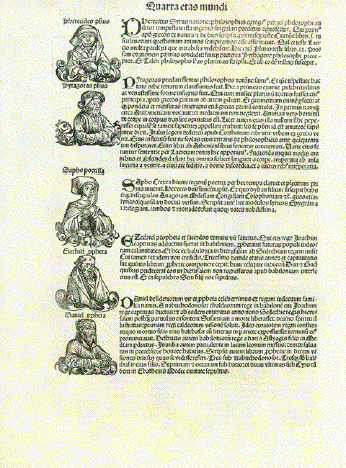
Marseille. - "Massilia" Earliest print of the city of Marseille Woodcut. Incunabila Published in "Nuremberg Chronicle" (Schedelsche Weltchronik or Liber chronicarum) By Hartmann Schedel (1446-1514) Published in the Latin (first) edition of this important incunabula work Nuremberg, 1493 The images on the reverse side
are: Pherecides of Syros, Pythagoras, Sappho the Greek
poetess, At the top of the page is a
repaired piece of the upper margin and title. Order Nr. SCHEDEL252910SOLD |
|
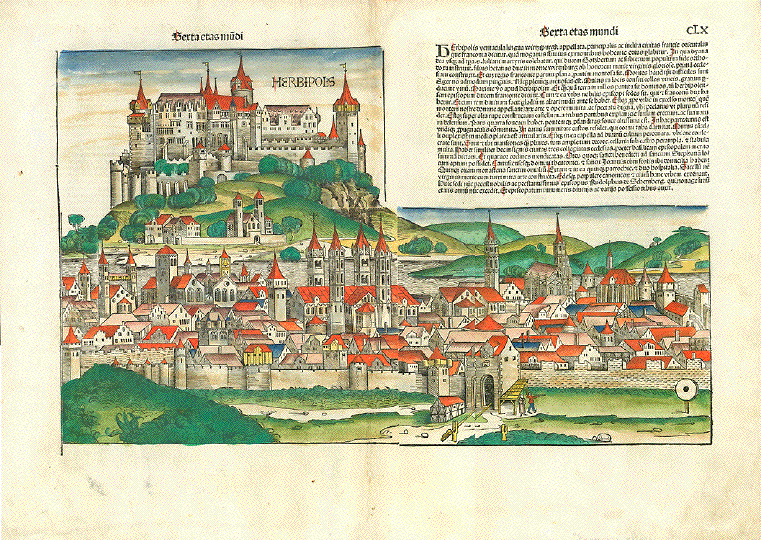
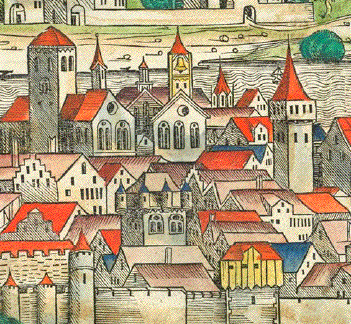
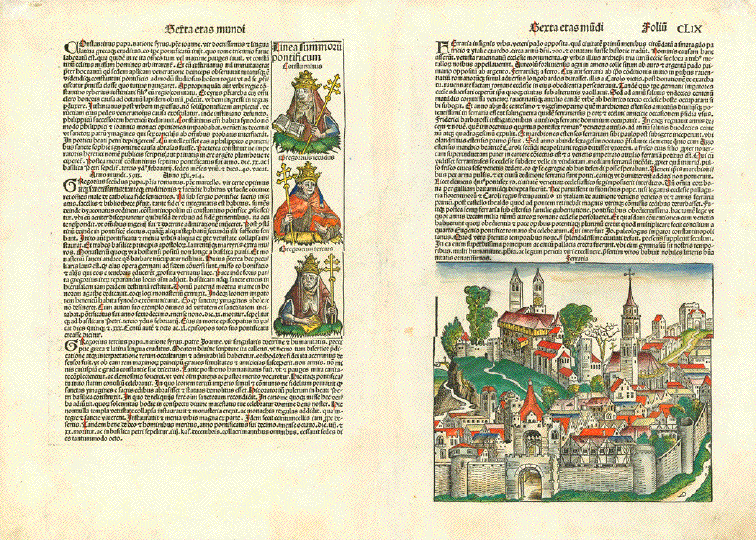
SCHEDEL - WÜRZBURG - BAVARIA - FRANCONIA Würzburg. - "Herbipolis" Sexta etas mundi Pag. CLX (160) General view of the important city in Bavaria, province of Franconia Type of print: Woodcut Color: Excellent hand coloring Published in: Nuremberg Chronicle ("Weltchronik" (Liber Chronicarum) Author: Hartmann Schedel. Published: Nuremberg, 1493 (first edition) Text: Latin. Relating text print above image in the right side of print. Verso: View of Ferrara "Ferraria" and portraits of: Pope Konstantin, Pope Gregorius II and Pope Gregorius III Condition: Very good. Excellent
hand coloring! Light general age toning gives the
woodcut the desired patina. Image including text upper right: 32,2 x 52,5 cm (ca. 12.7 x 20") Full Page: 44 x 61 cm (ca. 17.3 x 24") $ 3600.00 Order Nr. SCHEDEL235096 |
|
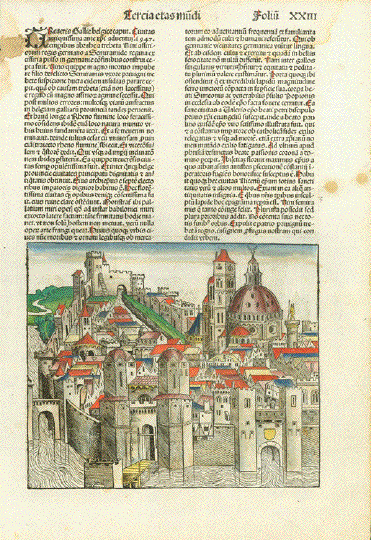
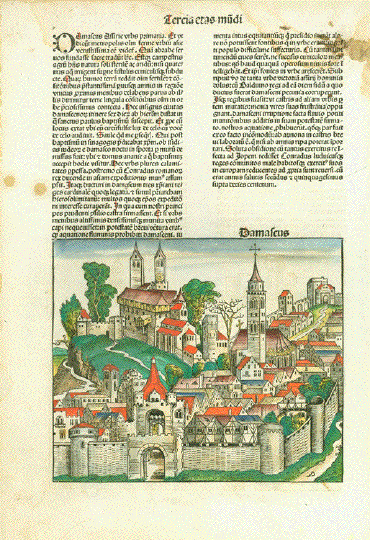
Trier. - "Treveris Gallie belgice caputÉ" Tercia etas mundi Fol. XXIII View of the City of Trier in Germany General view of the important city in Rheinland-Pfalz Type of print: Woodcut Color: Excellent hand coloring Published in: Nuremberg Chronicle ("Weltchronik" (Liber Chronicarum) Author: Hartmann Schedel. Published: Nuremberg, 1493 (first edition) Text: Latin. Relating text print above image. Verso: View of Damascus Explanitary text above image Condition: Very good. Excellent
hand coloring! Light general age toning gives the
woodcut the desired patina. Measurements: Trier - 19,3 x 22,6 cm (ca. 7.6 x 8.9") Damascus - 19 x 22,5 (7.5 x 8.8") Full sheet - 43 x 28,5 cm (ca. 16.9 x 11.2") $ 390.00 ORDER NR. SCHEDEL254147 |
|
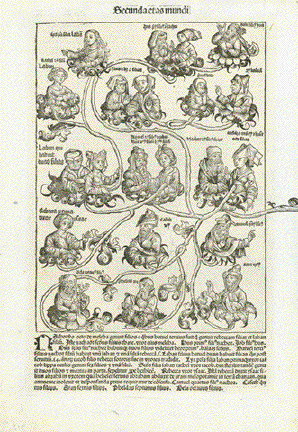
Reverse side:
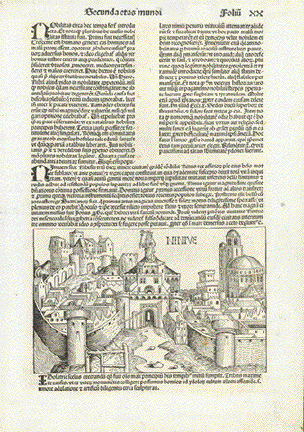
"Ninive"- Secunda etas mundi Folio XX (20) Woodcut from "Schedelsche Weltchronik" by Hartmann Schedel Nuremberg (Germany), 1493 FIRST edition On the full page including text in the Latin language On reverse side: family tree (linage of Laban) Image size ( Ninive ) : 14 x 22.5 cm ( 5.5 x 8.8 ") Page size: 43.5 x 29 cm ( 17.1 x 11.4 " Price: $ 420.00 Order Nr. SCHEDEL249617 |
|
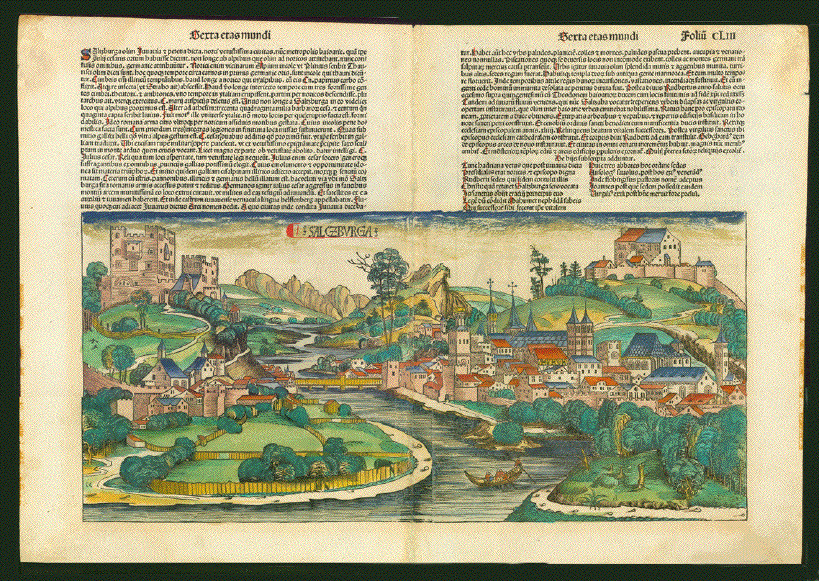
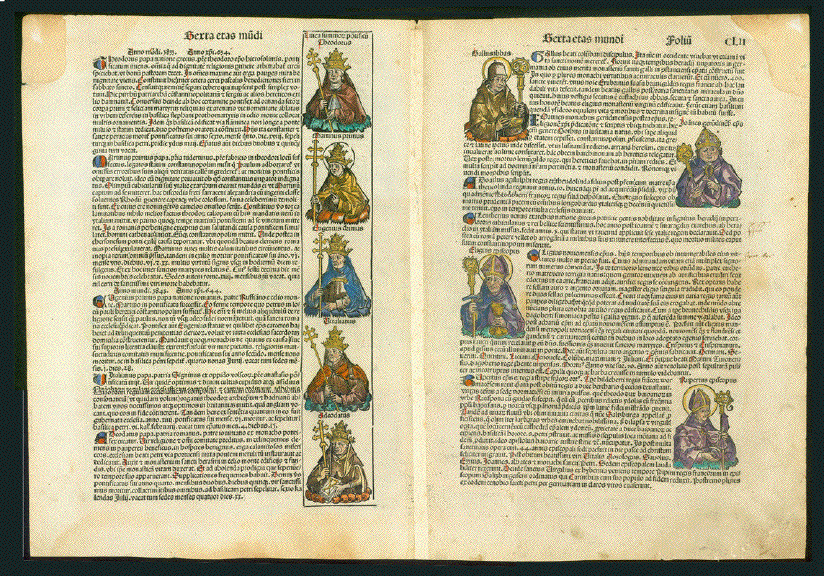
***** Reverse side:
"Salczburga" (Salzburg first view inprint) General view of the famous Austrian city. Woodcut. Original hand coloring. Text in Latin with some letters emphasized in red ink. On the left reverse side are
images of Popes and on the right side are images of Gallus
abbas, Published in the famous Nuremberg Chronicle (Schedelsche Weltchronik) By Hartmann Schedel (1440-1514) Latin edition (first edition of May 1493) Nuremberg, 1493 Very vivid colors. The
centerfold has been repaired and reinforced on the reverse
side. Image: 24,3 x 52,5 cm (ca. 9.6 x 20.7") Order Nr. SCHEDEL252155SOLD |
|
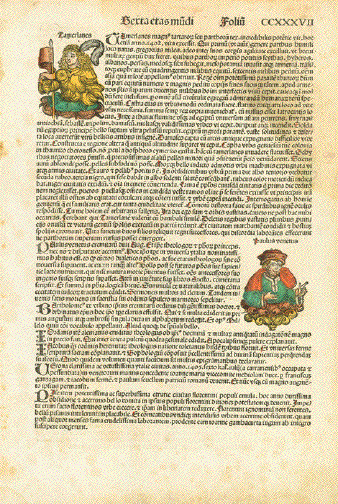
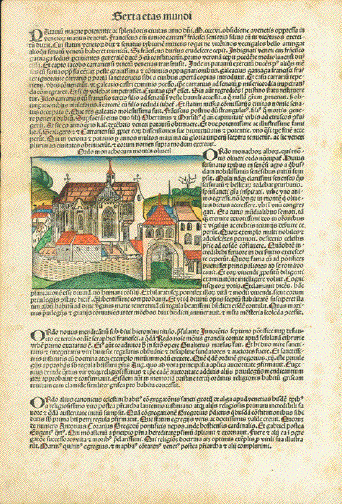
SCHEDEL CCXXXVII Sexta etas mundi. - "Tamerlanes" better known as Timur ibn Taraghai Barlas (1336-1405). Also as Taimur or Tamerlane. Timur was a Turco-Mongol Conqueror of Islamic creed, the founder of the Timurdian Empire in Persia. Never having lost a battle he was called invincible. But he was also an intellectual who left his footmarks in art and in architecture. Portrait: Paulus Venetus. (Paul of Venice - Paul von Venedig 1369-1429) Catholic philosopher, theologian, logician. Member of the Order of St. Augustine. verso: "Ordo monachorum montis olineti" Fratres eremitae de monte Oliveti, Congregatio Sanctae Mariae montis Oliveti (Benectans OSBOliv) Moenche des Oelbergs (Benediktinerorden OSBOliv) Condition: Very beautiful and rich original hand coloring. Upper corner has water stain. No damage done to any of the images. Page size: 41 x 28 cm (ca. 16.1 x 11") $ 340.00 Order N. SCHEDEL 252334 |
|
Reverse side:
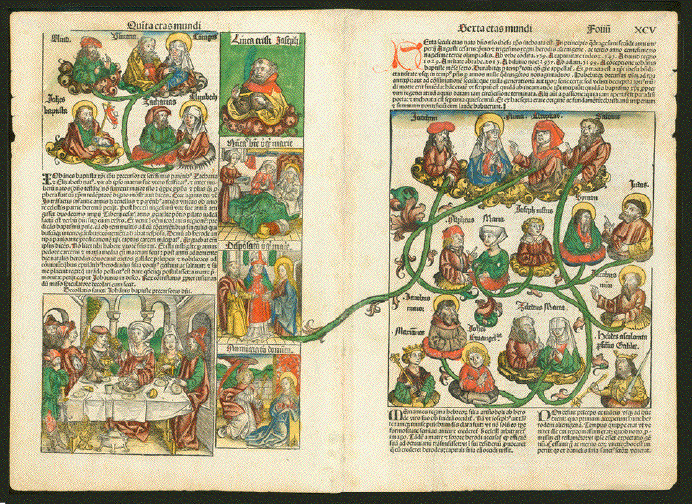
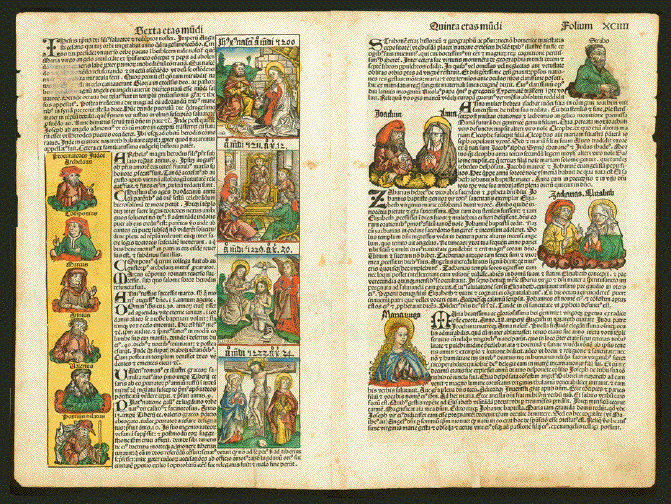
"Qui(n)ta / Sexta etas mundi Folium XCIIII" / XCV" Double page. Woodcut. Published in Nuremberg Chronicle. Nuremberg, 1493 ( First edition. Language: Latin ) Original, exceptionally beautiful hand coloring. Left sheet upper left: John Baptist, his parents and grand parents Left side bottom: Salome and guests celebrate the decapitation of John the Baptist Left sheet right side from top: Portrait of St. Joseph - Anna gives birth to St. Mary - Engagement of Mary and Joseph - Annunciation Right sheet: Genealogy of Jesus Christ Verso: Portraits on the left page, left side: Herodes Archalaos - Componius - Marcus - Annius - Valerius - Pontius Pilatus Scenes on left sheet right side: Birth of Jesus - 12 year-old Jesus teaching in temple - St. John baptizes Jesus - Jesus on the cross. O the right page: Portraits of Strabo - Joachim and Anna - Zachariah and Elizabeth - Virgin Mary This print is 0ver 520 years old. The outstanding original hand coloring suggests, that it derives from a princely copy of the Nuremberg Chronicle. There are some damages which we document in scans. - centerfold has been strengthened verso - There are smal repaired tears in margins, one reaching slightly into "Jesus on the cross" - Upper left and upper right corners had some water damage. One hole in that area has been repaired with Japan paper, probably centuries ago. In general the condition of this print is much better than good. Sheet size: 41 x 56 cm (ca. 16 x 22") $ 1250.00 Order Nr. SCHEDEL246261 |
|
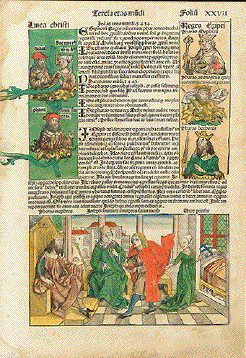
Part of Joseph Novella: Joseph, equally honored by Jews, Christians and Moslems. The chaste dream reader Joseph resists the temptationds of the Pharo's wife. The other pictures on front side of woodcut: Portraits of Pharaos Reverse side: Portraits of Inachus, Esrom and Aram. Plus a fictional rendering of the city of Athens. Origionally hand-colored woodcut from the Nuremberg Cronicle by Hartmann Schedel (1440-1515).Schedel, medical doctor, humanist and historian ist the author of the Cronicle. It was published by Anto Koberger (14440 / 45 - 1513), in Nuremberg in the year 1493 (Latin edition in the month of May, the very small and therefore rare German edition in December 1493). Traces of age and use. But, as it is over 500 years old, it is in very good condition. The original hand-coloring is simply superb! Size of sheet: 43.5 x 29.0 cm (17.1 x 11.4") Order Nr. SCHEDEL235514SOLD
Teil der Josephslegende. Jose Joseph, gleichermassen verehrt bei Juden, Christen und Moslems. Hier: Der keusche Traumdeuter Joseph verweigert sich den Lockungen des Pharao Potifar's Frau. Weitere Darstellungen auf der Vorderseite des Holzschnitts: Portraits verschiedener Pharaonen Rückseite des Holzschnitts: Fiktive Portraits von Inachus, Esrom und Aram sowie eine Phantasiedarstellung von Athen Altkolorierter Holzschnitt aus der Weltchronik von Hartmann Schedel (1440-1515). Schedel war Arzt, umfangreich gebildeter Humanist und Historiker. Die Nürnberger Chronik, auch Schedelsche Weltchronik genannt, ist sein wichtigstes Werk. Das umfangreiche, grossformatige Werk entstand 1493 in Nürnberg. Anton Koberger (1440 bis 1445 - Geburtsjahr nicht genau bekannt - 1513) verlegte dieses extrem bedeutende Inkunabelwerk, zunächst in Latein (Mai 149, dann in deutscher Sprache (Dezember 1493). Blatt zeigt Spuren von Alter und Gebrauch, ist aber nach über 500 Jahren in sehr gutem Erhaltungszustand. Die alten Farben sind prächtig! Blattgrösse: 43,5 x 29,0 cm (17.1 x 11.4") Order Nr. SCHEDEL235514 . SOLD |
|
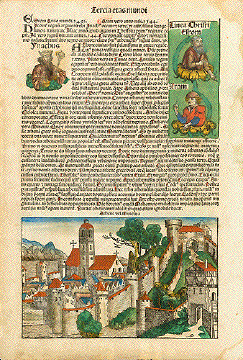
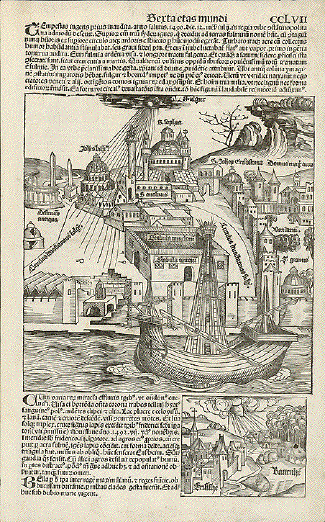
Türkei. - "Troja" (Troy - Troja) The ancient city of Troy depicted from a European point of view. Type of print: Woodcut Color: Original hand coloring. Superb. Royal! Publisher: Hartmann Schedel Published in: "Nuremberg Chronicle" . Page:XXXVI = 36 Where: Nuremberg When: 1493 First edition. Latin language Reverse side has related text print. Above view of Troy we see portraits of three Toyan kings Condition: Good for the age of 520 years. Browning from fingers turning pages in lower right margin corner Upper right has a water spot. There are minor traces of age and use. Some small tears in margins have been repaired Image of Troy: 19,7 x 22 cm (ca. 7.8 x 8.7") Order Nr. SCHEDEL238624 SOLD |
|
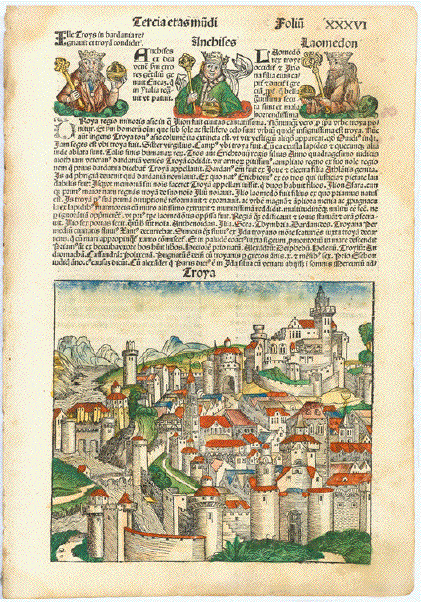
Türkei. - "Troja" (Troy - Troja) The ancient city of Troy depicted from a European point of view. Type of print: Woodcut Publisher: Hartmann Schedel Published in: "Nuremberg Chronicle" . Page:XXXVI = 36 Where: Nuremberg When: 1493 First edition. Latin language Reverse side has related text. Above view of Troy we see portraits of three Troyan kings Very good condition. In the
upper right margin is faint light brown ink writing. Image of Troy: 19,7 x 22 cm (ca. 7.8 x 8.7") $ 340.00 Order Nr. SCHEDEL253825 |
|
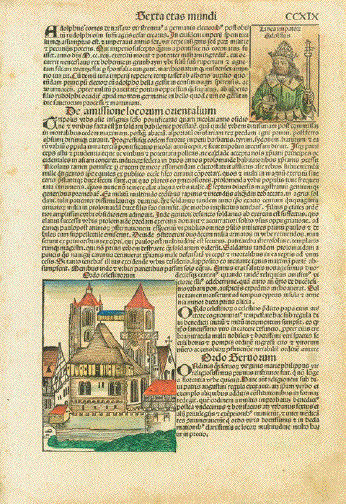
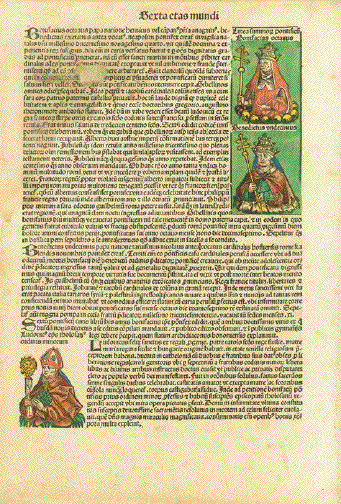
SCHEDEL CCXIX - "Sexta etas mundi. Ordo celestinorum" Ordo Sancti Benedicti Coelestinensis, OSBCoel, also: Congregatio Coelestinensis. THis Benedictan monks order was founded by Pope Celestine V. (Pietro di Morrone) 1294. The last monasteries of this congregation were abolished in Naples 1806 and in Sicily 1810 Upper right corner: Portrait Adolf de Nassau (1250-1298) Verso - Portraits from top: Pope Bonicacius VIII (1235-1303) - Pope Benedict XI (1240-1304) Bishop Louis (son of King Carlo of Sicily) Condition: Upper corner with water stain, some little holes and repairs . Therefore loss of color on the portrait of Adolf de Nassau. Page size: 41 x 28 cm (ca. 16.1 x 11") $ 250.00 Order N. SCHEDEL 252335 |
|
Reverse side:
Sexta etas mundi - Foliu C1 (This is page Nr. 101 in the Nuremberg Chronicle) "Data es mini potestas in cell et in terra: Salvator" Translation: All power is given on to me in heaven and in earth Reverse side: Text print. Latin language Jesus surrounded by the Twelve Apostles. In the corners: The symbols of the four Evangelists in the four corners Type of print: Woodcut Color: Hand-colored Publication: World Chronicle. Also: Nuremberg Chronicle. Schedel's Weltchronik Author: Hartmann Schedel (1440-1514) Artists: Michael Wohlgemut (1434-1519) and Wilhelm Pleydenwurff (1440-1494) Publisher: Anton Koberger (1440-1513) Published: Nuremberg, 1493 Edition: First edition. Latin text Condition: Very good. Minor blemishes in margins. One small triangular loss of paper in lower margin edge. Image: 36 x 21,8 cm (ca. 14.2 x 8.6") Sheet: 43 x 30,5 cm (ca. 16.9 x 12") $ 2000.00 Order Nr. SCHEDEL243550 |


|
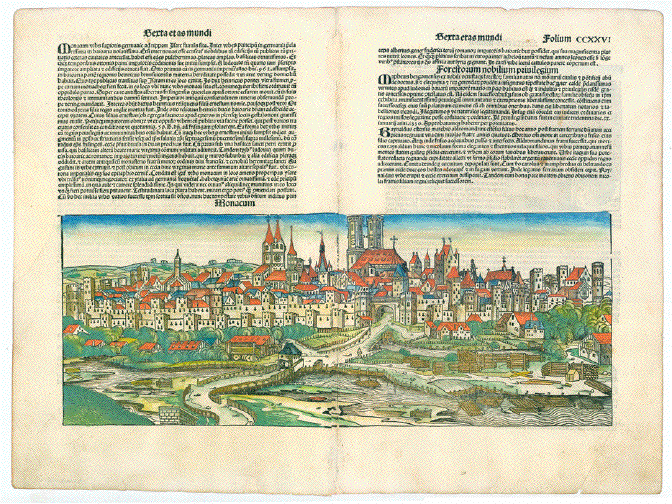
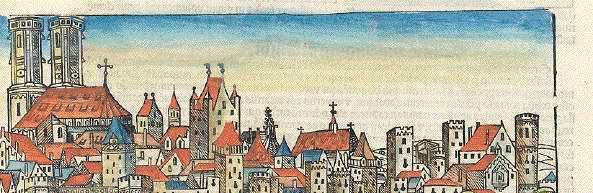
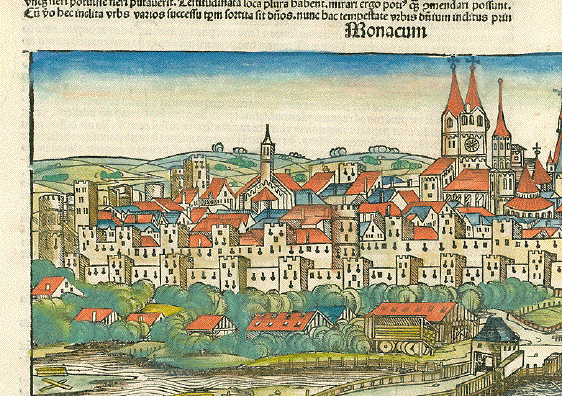
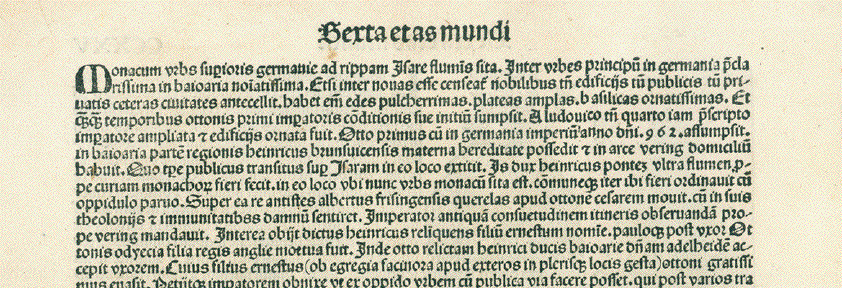
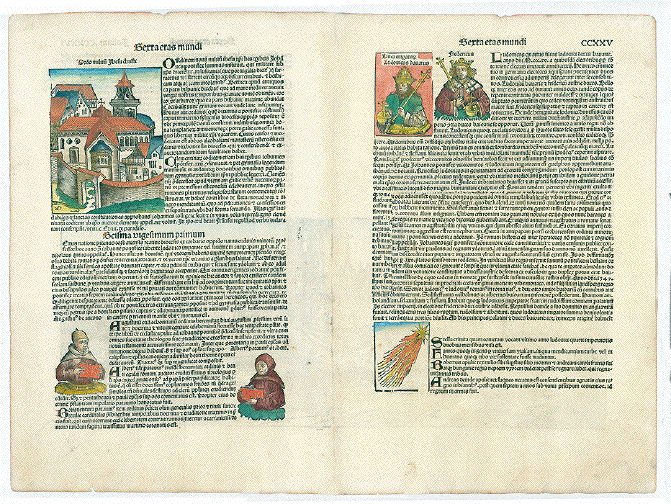
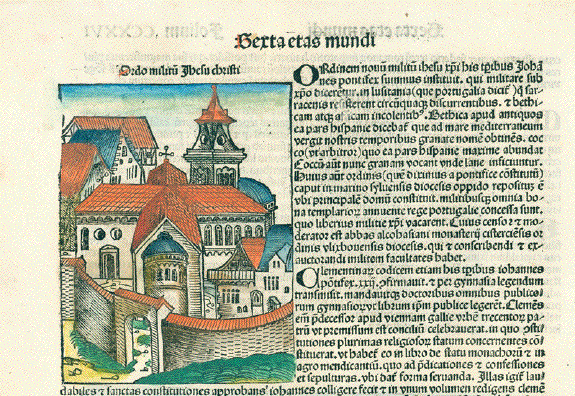
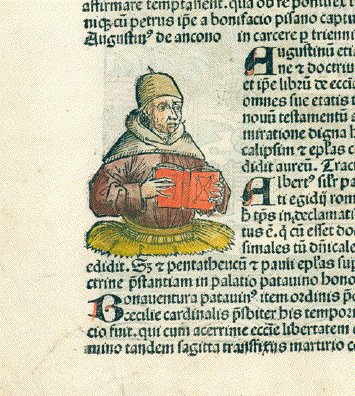
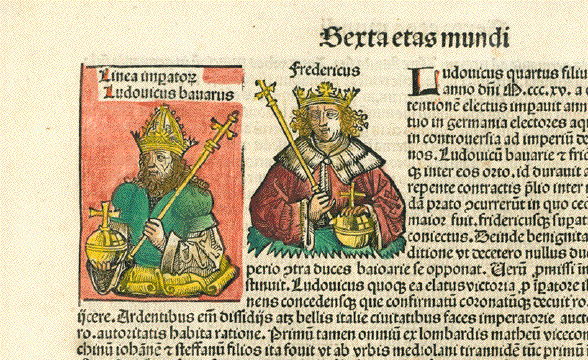
"Monacum" Muenchen, Munich Type of print: Woodcut Color: Superb hand coloring Author: Harmann Schedel (1440-1514) Publikation: Nürnberg Chronische / Schedelsche Weltchronik Printer: Anton Koberger (1440-1513) Edition: First edition. Latin langue text Verso left side: Order of the Knights of Jesus Christ (Portugal), Portraits of Augustinus of Ancona, Albertus of Padua. Verso right side: Ludwig, Duke of Bavaria, and Frediric, Duke of Austria Verso at bottom: A comet Date of publication: 1493 Condition: Margins show some traces of age and use., such as repaired tears and some minor soiling. Left margin had a loss of paper, which has been professionally filled in with chronicle paper without even touching the image. Image: 20,2 x 52,7 cm (ca. 8 x 20.7") Sheet size: 46,3 x 62,4 cm (ca. 18.2 x 24.6") $ 2800.00 Order Nr. SCHEDEL242320 Reverse side Verso:
|
|
Order Nr. SCHEDEL238235 REVERSE:
|
|
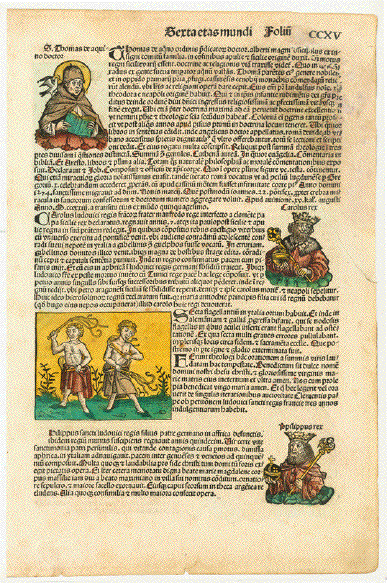
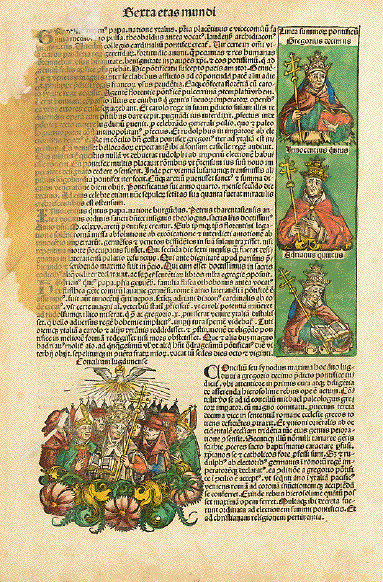
Print showing Flagellants, Thomas Aquinus, King Charles and King Philippus Definition of a flagellant: One who whips, especially one who scourges oneself for religious discipline or public penance. Wikipedia writes: Flagellants are practitioners of an extreme form of mortification of their own flesh by whipping it with various instruments. Type of print: Woodcut Color: Original hand coloring Artist: Anonymous Publisher: Hartmann Schedel Publication: Nuremberg Chronicle (Schedelsche Weltchronik) Page CCXV (215) Published: Nuremberg, 1493 First edition, Latin language Front side shows: Flagellants (Flagellanten), Thomas Aquinus, King Charles and King Philippus Reverse side shows: Councis of Lyon and three Pope-portraits: Gregor X, Innocens V and Adrian V Condition: While The image of flagellants is flawless and in absolutely wonderful original hand coloring, the page has been repaired, especially in upper right corner, where a water stain is clearly visible. Someone has, centuries back, put yellowish Japan paper behind a tear. there are other minor traces of age and use. Flagellants: 8 x 9,8 cm (ca. 3.1 x 3.9") Full page size: 41,5 x 26,5 cm (ca. 16.3 x 10.4" Order Nr.SCHEDEL241394 SOLD Reverse side:
|
|
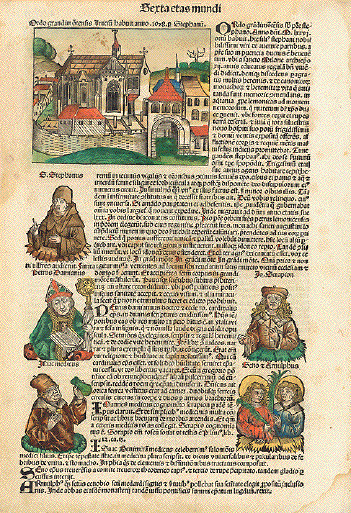
Monastic order of Grandimontines (Grosmont). Saint Stephanus was the founder of that early monks order of Christianity. Type of print: Woodcut Color: Original hand coloring Publisher: Hartmann Schedel Publication: Nuremberg Chronicle - Schedelsche Weltchronik Where /When?: Nuremberg, 1493 Edition: First edition in Latin language. Page "CXCII" = 92 Further shown on front: Portrait of St. Stephanus, Petrus Damian (born in Ravenna), Isaak Benimiram a medical doctor, Serapion of Alexandria, Seno bishop in Trier (Germany) and Arnulphus bishop in Lyon (France) Reverse side shows portraits of Henry IV Holy Roman Emperor and King Rudolph I of Germany Condition: Irregular age toning. Upper left has water stain with some damage to paper. Some foxing. Lower right corner has small water stain. The original hand coloring is superb! Page size: 41 x 28 cm (ca. 16 x 11") Order Nr. SCHEDEL 239626 SOLD Reverse side:
|
|
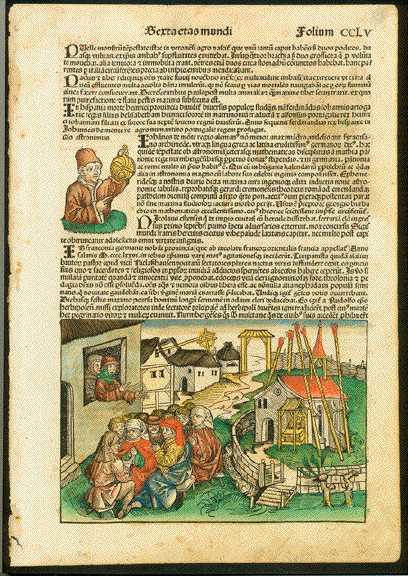
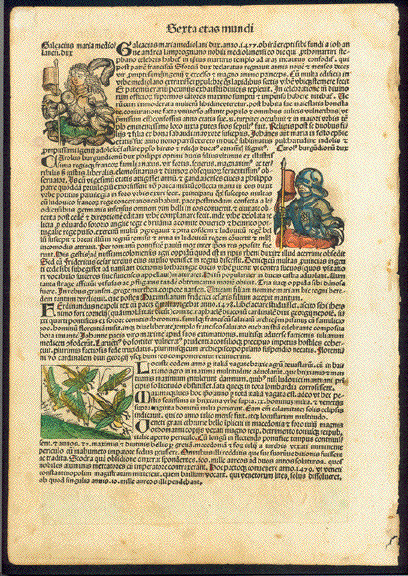
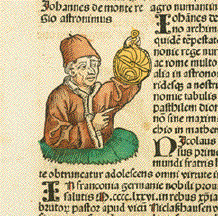
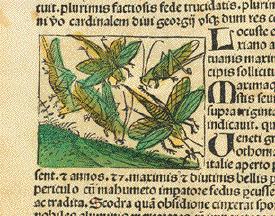
"Sexta etas mundi Fol.CCLV" Page 255 Front page: "Johannes de monte regio astronomus" Regiomontanus. Johann Mueller - also Johannes Molitor 1436 - 1476). Regiomontanus = Latin for Koenigsberg in Franconia). He was a famous astronomer, mathematician and publisher. A co-member of the so called Vienna School of Astonomy. No title. Niklashausen in Franconia. Crowd gathered aroung Hans Boehm (Hans Behem, a herdsman and preacher in Niklashausen, promising his numerous followers indulgence drum their sins. He was also preaching a sort of socialism (common property). He was considered a heretic by church authorities. And the bishop of Wuerzburg let him be arrested, taken to Wuerzburg and burnt at stake. ***** Verso: "Galeacius maria mediolannen dux" - Galeazzo Maria Sforza, Duke of Milano (1444 - 1476), known as a patron of Art and Music. "Carol burgundionum dux" . Charles I. (the Bold) of Burondy (1433-1477) No title. Locust plague in northern Italy Outstanding original hand coloring. Superb quality! Upper right, respectively upper left corner has water stain with small repaired holes in paper. The image of Sforza has lost much of much of its original hand coloringSee scans. Generally aged paper, age and use showing. See scans. Page size 42 x 28,5 cm (ca. 16.5 x 11.2") $ 1200.00 Order Nr. SCHEDEL249616 |
|
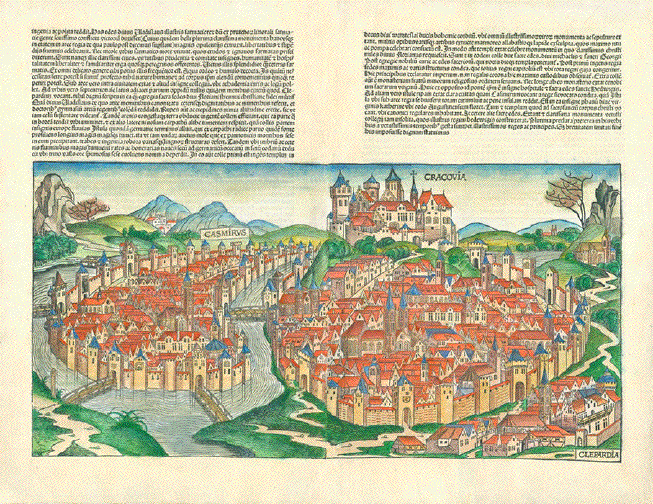
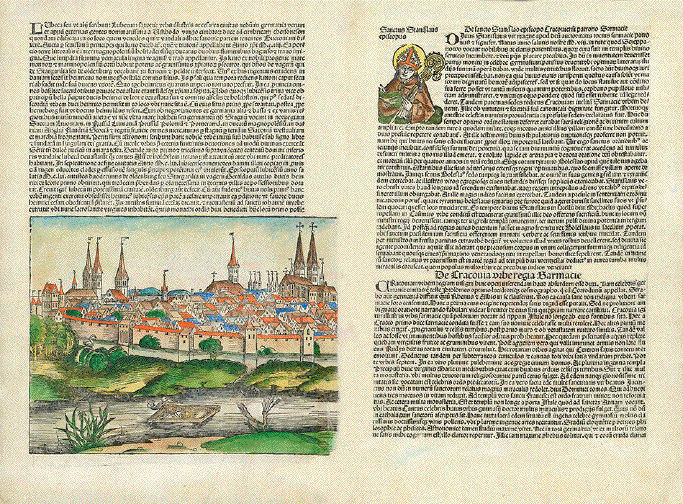
Cracow. - "Cracovia" Hand-colored woodcut from the ãNuremberg Cronicle" by Hartmann Schedel Nuremberg, 1493. Latin edition Verso half view of Lubeck and a portrait of bishop Stanislaus of Cracow. Woodcut has one pleat crease in lower part. General age toning. Centerfold has been repaired and is hardly visible. Woodcut is basically in very good condition! Image size: 25 x 50.7 cm (9.8 x 20") Page size: 43.5 x 56.8 cm (17.1 x 22.4") Order Nr.SCHEDEL239012 SOLD Reverse Side:
|
|
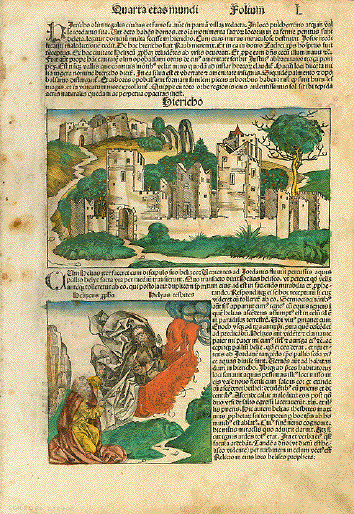
Jericho. - "Hiericho" Type of print: Woodcut Color: Original hand coloring Publisher: Hartmann Schedel Publication: Nuremberg Chronicle - Schedelsche Weltchronik Where /When?: Nuremberg, 1493 Edition: First edition in Latin language. Page "L" = 50 Further shown on front: Elija Goes to heaven in a fiery cart drawn by fiery horses. Behind stays Elisha. Reverse side shows diverse portraits Condition: Irregular age toning. Left margin has heavy foxing with no impact on images. Right lower margin corner has finger-marks from turn-page-skimming. Upper right corner has faint water stain. The original hand coloring is superb! Jericho: 12,5 x 22,3 cm (ca. 4.9 x 8.8") Elija: 13 x 13 cm (ca. 5.1 x 5.1") Page size: 41 x 28 cm (ca. 16 x 11") Order Nr. SCHEDEL238903SOLD |
|
No title. Scene of a circumcision. Woodcut from the ãNuremberg Cronicle" (Schedelsche Weltchronik) by Hartmann Schedel. Nuremberg, 1493. Latin edition. This woodcut has a definate antisemite background. Simon of Trent (Trient, Trento) was a boy, born in Trento in the year 1472. At age three he was missing. His body was alledgedly found in a Jewish home in Trento. The boy's disappearance was blamed on the city's jewish communinity, whose leaders ãconfessed" a ritual murder under torture. This caused a major blood libel. Fifteen Jewish Trento citizens were sentenced to death and burned at stake. On the full page. Reverse side has printed text and two portraits and a comet. A few very minor traces of age and use. Small repaired tear on upper margin edge. Considering the age of over 500 years, this woodcut is an very good condition. 42.5 x 28.5 cm (16.7 x x 11.2") Order Nr.SCHEDEL235602SOLD |
|
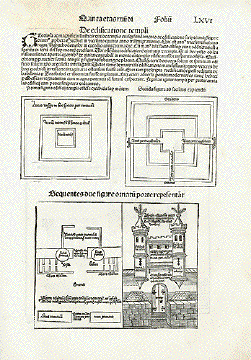
"De edificatione templi" On either side of woodcut fictional plans of Solomon's Temple in Jerusalem. Following the ãTent of Meeting (Tabernacle) this was the first Jewish temple built of stone. Nebukadnezar II. destroyed it. After the Babylonian captivity a second temple was built, which was lacking the most sacred part: The Ark of the Covenant, missing since the destruction of the first temple. The second temple was destroyed by the Romas. Left nowadays is only part of the temple's wall: The Wailing Wall. Salomon's Temple is also an important constituent of Freemasonry and Rosicrucians. There is a clearcut relatedness to Salomon's Temple, based on the ideas of early habitual evidence during the Middle Ages. Woodcut from the Nuremberg Cronicle by Hartmann Schedel (1440-1515). Schedel, medical doctor, humanist and historian ist the author of the Cronicle. It was published by Anto Koberger (14440 / 45 - 1513), in Nuremberg in the year 1493 (Latin edition in the month of May, the very small and therefore rare German edition in December 1493). Upper margin corner shows traces of age: it is frayed, tatered and brittle with repair. Otherwise in very good condition, especially when considering, that this woodcut is over 500 years old. Latin (first) edition The entire page: 45,5 x 32 cm (17.9 x 12.6") $380.00 Order Nr. SCHEDEL235520
"De edificatione templi" Auf beiden Seiten des Holzschnitts mehr oder weniger fiktive Darstellungen des Salomonischen Tempels. In der Nachfolge der Stiftshütte, die ein mobiles Zelt war, war der Jerusalemer Tempel der erste steinerne Tempel der Juden. Nebukadnezar II hat ihn zerstört, als er die Juden in die ãBabylonische Gefangenschaft" nahm. Der an gleicher Stelle errichtete zweite Tempel auf dem Tempelberg in Jerusalem erreichte nicht die Pracht. des ersten. Ihm fehlte vor allem das Allerheiligste der Juden : die Bundeslade, die seit der Zerstörung des ersten Tempels vermisst wird. Nach der Zerstörung des zweiten Tempels durch die Römer bestehen heute nur noch Reste der Tempelmauer: Die Klagemauer. Der Jerusalemer Tempel ist auch Bestandteil der Tradition der Freimaurer und Rosenkreuzer.Es gibt einen deutlichen Bezug zum Salomonischen Tempel, der sich in den Gebräuchen der Steinmetzbauhütten des Mittelalters manifestiert. Holzschnitt aus der Weltchronik von Hartmann Schedel (1440-1515). Schedel war Arzt, umfangreich gebildeter Humanist und Historiker. Die Nürnberger Chronik, auch Schedelsche Weltchronik genannt, ist sein wichtigstes Werk. Das umfangreiche, grossformatige Werk entstand 1493 in Nürnberg. Anton Koberger (1440 bis 1445 - Geburtsjahr nicht genau bekannt - 1513) verlegte dieses extrem bedeutende Inkunabelwerk, zunächst in Latein (Mai 149, dann in deutscher Sprache (Dezember 1493). Obere Marge hat in einer Ecke Altersschäden (ausgefranst, brüchig). Etwas repariert.Ansonsten ist der Holzschnitt in sehr gutem Zustand, zumal er über 500 Jahre alt ist. Lateinische (erste) Ausgabe. Die ganze Seite: 45,5 x 32 cm $380.00 Order Nr. SCHEDEL235520 |
|
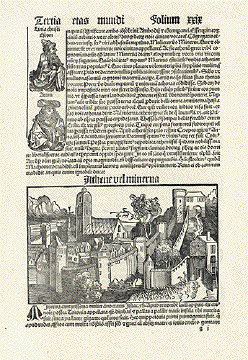
ãAthene vel minerva" A fictional view of Athens Woodcut. This is a veritablke rarIty From the pirate edition of the cronicle by Johann Schoensperger. Augsburg, 1496 The ãNuremberg Cronicle" by Hartmann Schedel was published in 1493. Book printer Johann Schoensperger (1455-1521) in Augsburg saw the immediate success of this important incunabila book and printed without permission a pirate edition of the work. He chose a smaller size, and since he did not own and could not use the existing woodblocks of Nuremberg, he had to have new blocks cut. Hartmann Schedel and publisher Anton Koberger, of course, learned that Schoensperger was trying to deceit them and sued him. The following law suit went down in history as the first copyright law suit ever. Schoensperger had finished the book in 1496, but lost the law suit the juidicial verdict forbade him to sell the books. Almost the entire edition was destroyed. An estimated 200 copies escaped the scrubbing and survived. The here offered woodcut stems from one of these few copies and is therefore a very rare specimen. Verso: Portraits of historical celebrities. Language Latin. Very good condition Sheet size 30 x 20.5 cm (11.8 x 8.1") $ 290.00 Order Nr.SCHEDEL235740 |
|
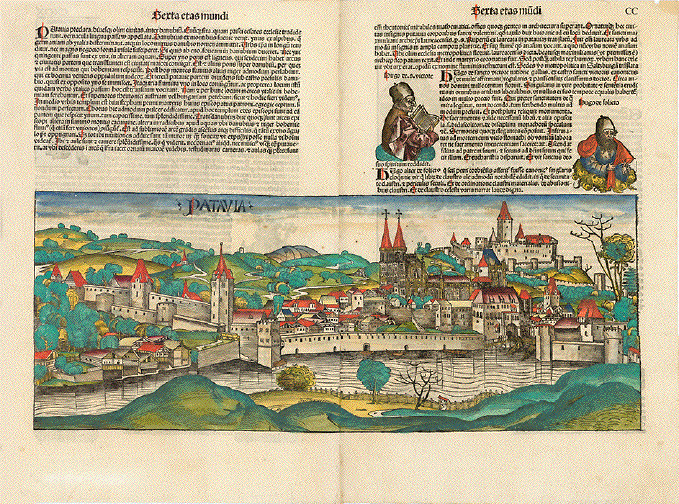
Schedel - Passau "Patavia". Passau General view of the important city on Danube, Inn and Ilz. Type of print: Woodcut Color: Excellent original hand coloring Published in: Nuremberg Chronicle ("Weltchronik" (Liber Chronicarum) Author: Hartmann Schedel. Published: Nuremberg, 1493 (first edition) Text: Latin. Relating text print above image and two portraits on right side. Verso: Five portraits on left side, four portraits on right side. Portrait-relating text print. The first ever printed large view of Passau. Condition: Very attractive hand coloring! The two halves joined together perfectly, the joining reenforced vertically with a strip of paper of incunabula time. Woodcut had once been framed or kept in a matting. There are traces of hanging print in the extreme upper left and right corners. Light general age toning gives the woodcut the desired patina. Lower left corner has irrelevant crease outside image. Other minimal traces of age in margins. Page size: 42,2 x 57,5 cm (ca. 16.6 x 22.6"). Image: 19,8 x 51.5 cm (ca. 7.8 x 20.3"). Order Nr. SCHEDEL239063 SOLD reverse side:
|
|
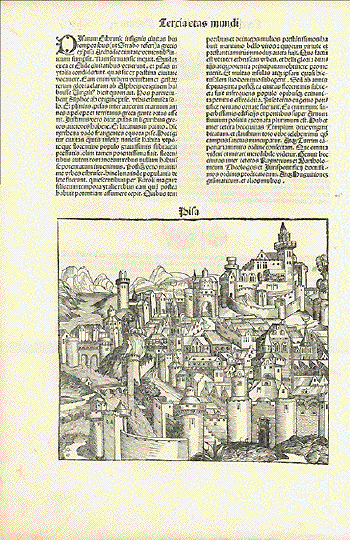
ãPisa" Type of print: Woodcut Edition: First edition Latin language Folio / Page: XLV (45) Published in: ãNuremberg Chronicle" (Schedsche Weltchronik) Author: Hartmann Schedel Where: Nuremberg, Germany When: 1493 Condition: Very Good. Only very minor traces of age and use. Above image and reverse side has text print in Latin Measurements - Image: 19,7 x 22 cm (ca. 7.8 x 8.7") Sheet: 44 x 29 cm (ca. 17.3 x 11.4") $ 350.00 Order Nr. SCHEDEL236407 Reverse side:
|
|
ãPrussia nunc germanie provincia" East Prussia now Poland and Russia Woodcut. Published in ãLiber Chronicarum" by Hartmann Schedel ( Schedel's Weltchronik - Book of Chronicles) Nuremberg 1493. Latin edition. Waterstain in upper corner
(only in text). Some very minor traces of age and use. Image
in very good condition. Page size: 46 x 32 cm (ca. 18 x 12.6") Image: 23.2 x 22.5 cm (ca. 9 x 8.8") Order Nr. SCHEDEL237907SOLD |
|
|
|
Order Nr. SCHEDEL237236SOLD REVERSE.
|
|
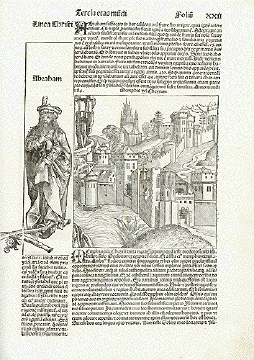
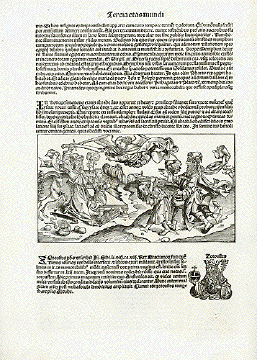
Abraham, progenitor and patrirch equal to Jews, Christians and Moslems: a 15th century portrait. Reverse side: A godsent angel prevents the sacrifice of Isaak Woodcut from the Nuremberg Cronicle by Hartmann Schedel (1440-1515). Schedel, medical doctor, humanist and historian ist the author of the Cronicle. It was published by Anto Koberger (14440 / 45 - 1513), in Nuremberg in the year 1493 (Latin edition in the month of May, the very small and therefore rare German edition in December 1493). very minor traces of age, considering that this woodcut is over 500 years old. The entire sheet: 18.1 x 12.4" Order Nr. SCHEDEL235517SOLD |
MAPS: Maps of many countries from the great cartographers of the last 500 years.
PRINTS OF THE ENTIRE WORLD: Antique town and city views.
|
Ansichten von Deutschland-Views of Germany Landkarten von Deutschland-Maps of Germany Visit us at the following sites: https://lovelyantiqueprints.com twitter.com/philographikon2 ©Rainer Rauhut
|